Foolproof Pecan Caramel Cinnamon Roll Pound Cake

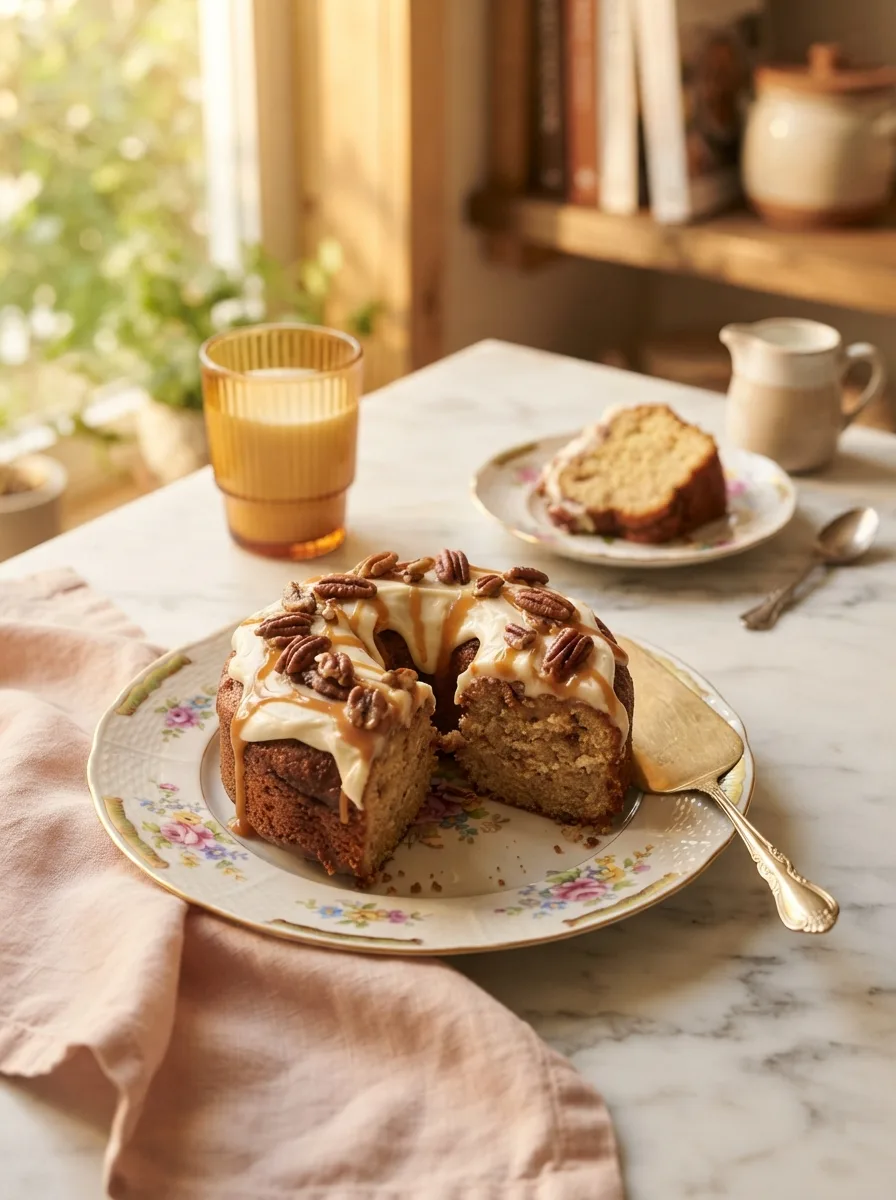
If you’ve ever loved cinnamon rolls but not the yeast, the proofing, or the two-hour wait, this pecan caramel cinnamon roll pound cake is the shortcut. It’s a dense, buttery pound cake with a cinnamon-pecan swirl running through the center, sticky caramel pecans on top, and a cream cheese glaze drizzled over the whole thing.
I tested this three times. The first two attempts, the cinnamon swirl sank straight to the bottom of the pan during baking — a solid, gummy layer instead of a ribbon through the crumb. The third test, I changed one thing: a spoonful of flour whisked into the cinnamon-sugar filling. Problem solved.
The result is a pound cake with a swirl that actually stays where you put it.
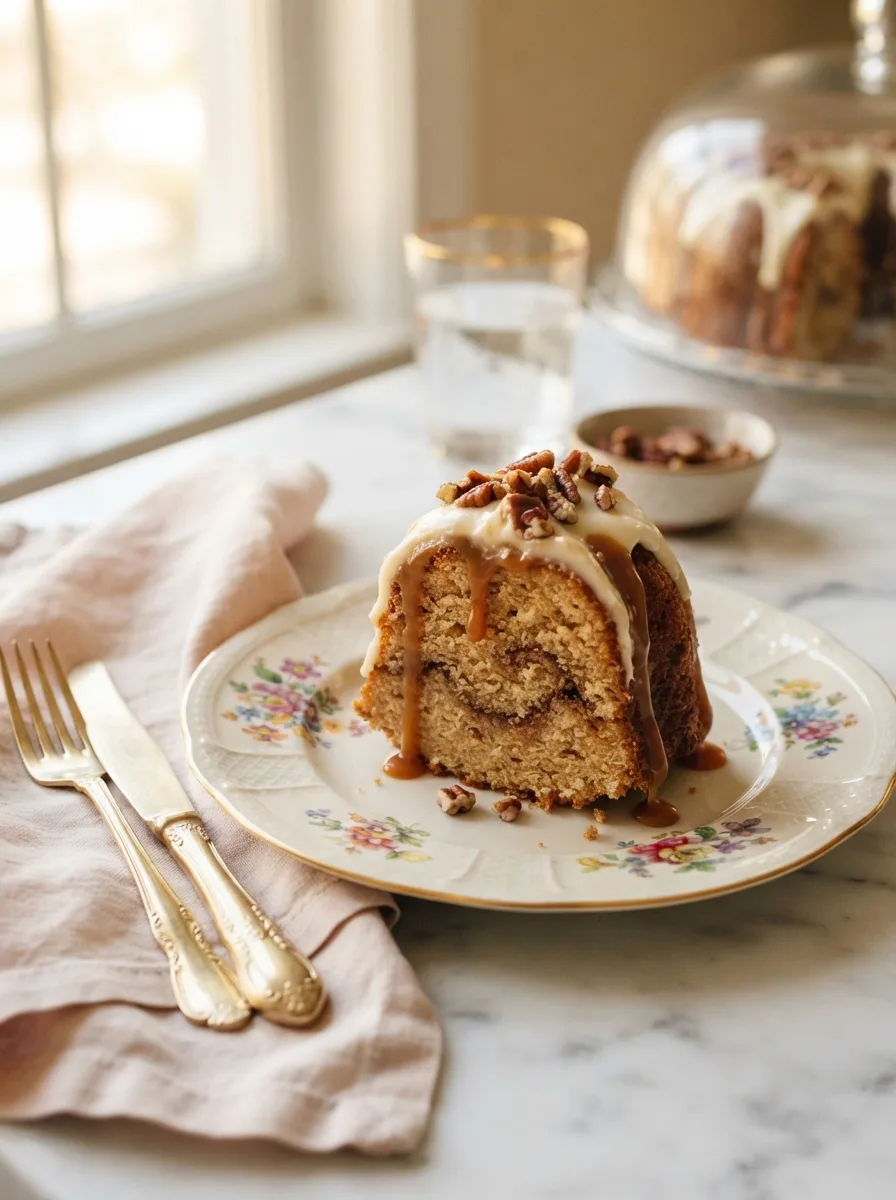
What makes this version different from a plain cinnamon swirl cake is the caramel — a quick stovetop caramel poured over toasted pecans while the cake is still slightly warm, so it soaks into the top layer instead of sitting on it like frosting. The cream cheese glaze on top is the same idea as cinnamon roll icing, just thin enough to drizzle instead of spread.
★★★★★ “I’ve made this twice now and both times the swirl stayed exactly where it was supposed to be — no sunken cinnamon layer at the bottom like every other pound cake I’ve tried. My husband asked if I bought it from a bakery.” — Renee T., recipe tester (pre-launch)
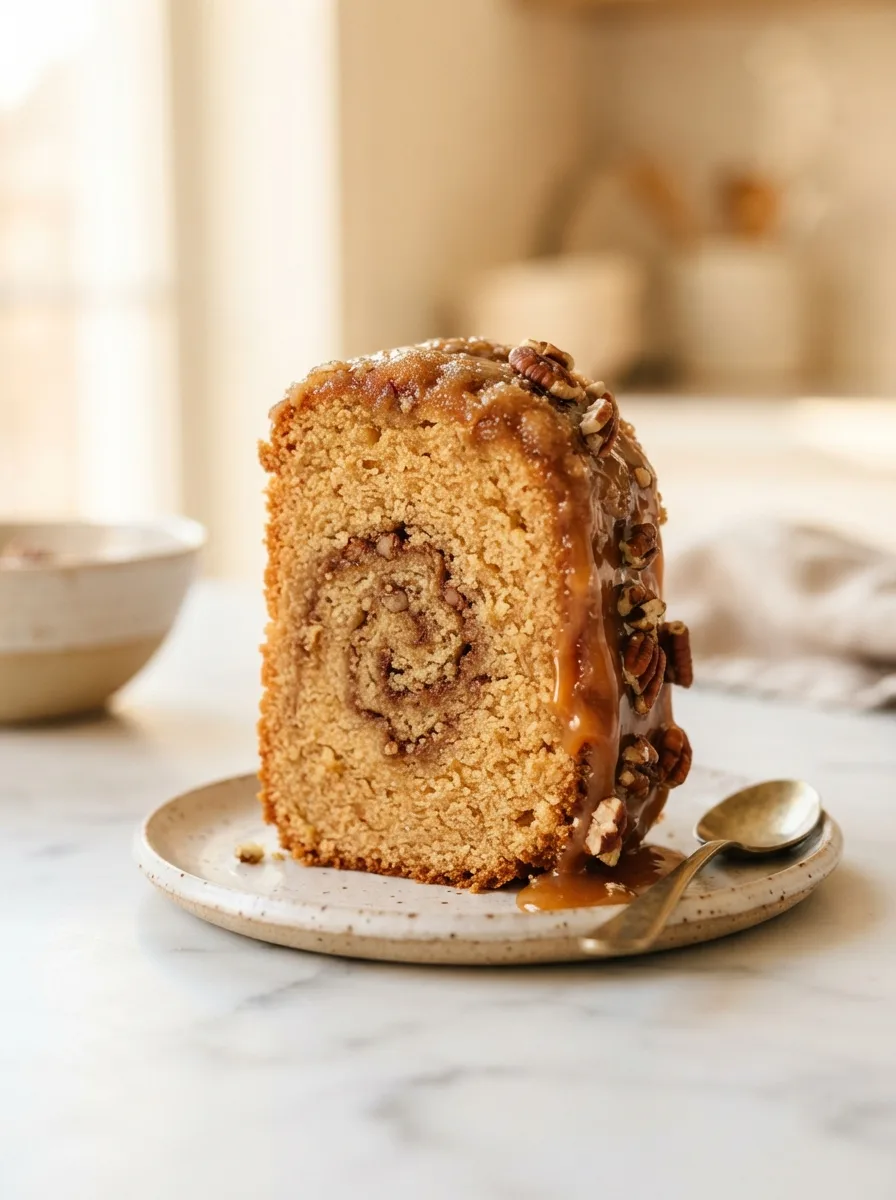
- The swirl actually stays put: Most cinnamon swirl cakes end up with the filling baked into a solid layer at the bottom. This one doesn’t, because of one small change in the filling (more on that below).
- Two toppings, one bowl each: The caramel pecan layer and the cream cheese glaze both come together in a single saucepan and a single bowl — no candy thermometer required.
- Tastes like a cinnamon roll, bakes like a pound cake: You get the flavor you’re craving without yeast, proofing, or rolling dough.
- Feeds a crowd and holds up well: This is a dense, moist cake that keeps its texture for days — good for a slow Sunday breakfast or a dessert table.
Key Ingredients
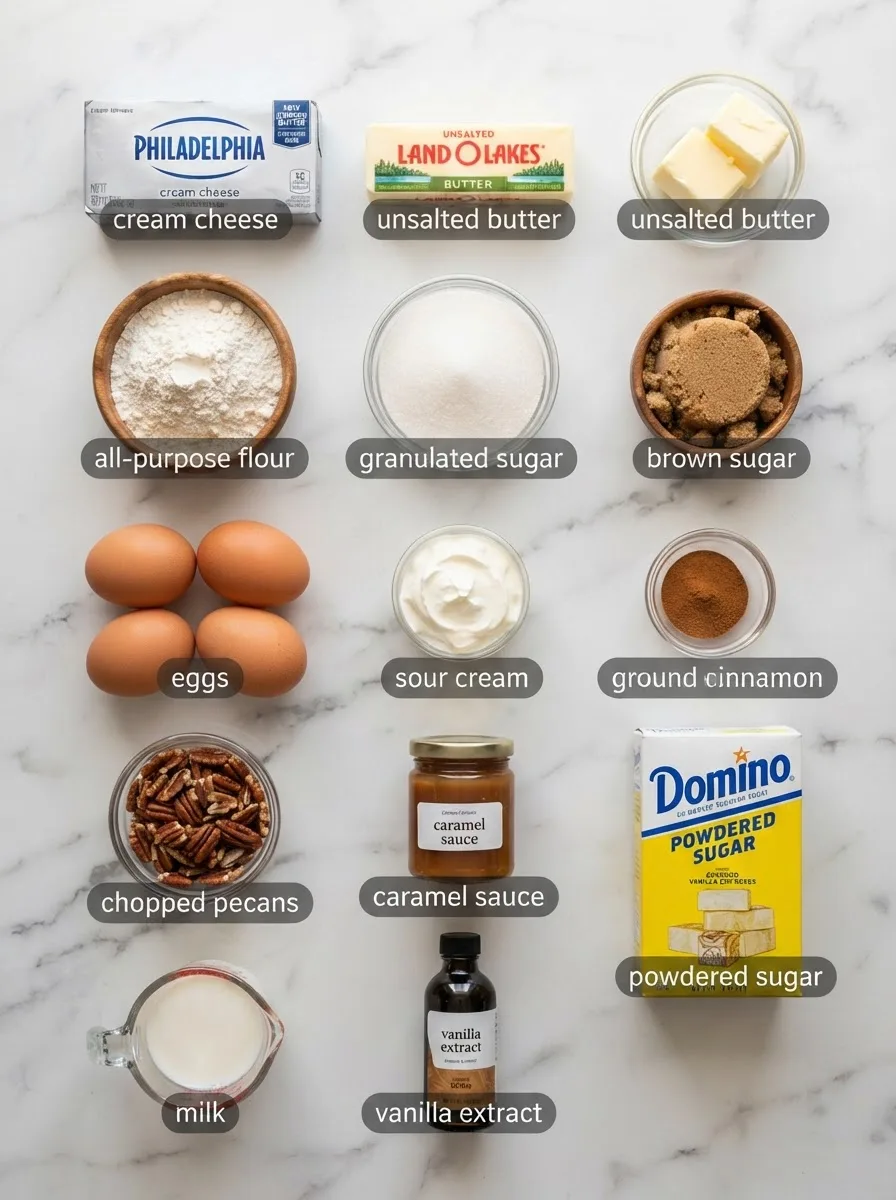
Cream cheese (8 oz, room temperature). This goes into the batter itself, not just the glaze. It’s what makes a pound cake actually dense instead of just heavy — the extra fat and slight tang keep the crumb tight without making it dry. Full-fat is non-negotiable here; reduced-fat cream cheese adds water the batter doesn’t need.
Sour cream (½ cup). Sour cream keeps the crumb moist for days, which matters for a cake this size. Full-fat plain Greek yogurt works as a 1:1 swap, though the crumb will be very slightly less rich.
Brown sugar + flour in the swirl filling. The brown sugar is what makes it taste like a cinnamon roll instead of plain cinnamon-sugar. The flour is the fix — 1 tablespoon whisked into the filling keeps it from turning into wet, heavy pockets that sink during baking.
Toasted pecans. Toasting them for 5 minutes before using is worth the extra step — raw pecans taste flat next to the caramel, and toasted ones hold their crunch even after baking.
Caramel sauce. Store-bought works fine and saves time. If you want to make your own, a simple butter-brown sugar-cream caramel takes about 8 minutes on the stove and tastes noticeably richer.
Ingredient Note: Do not skip the tablespoon of flour in the cinnamon-pecan filling. It’s the single change that keeps the swirl suspended in the crumb instead of sinking to the bottom of the pan — see the Controlling section below for the full comparison.
Equipment You’ll Need
- 10-cup bundt or tube pan — a light-colored nonstick pan gives the most even color; dark pans can over-brown the edges before the center finishes.
- Stand mixer or hand mixer — you need real creaming power for the cream cheese and butter; a whisk alone won’t get there.
- Kitchen scale (optional but recommended) — measuring the flour by weight (280g) avoids the packed-flour problem that makes pound cakes dense and dry.
- Small saucepan — for the caramel pecan topping.
- Wire cooling rack — the cake needs to cool most of the way before glazing, or the glaze slides right off.
Controlling the Cinnamon Swirl (A Controlled Test)
I tested this cake three times, changing only the cinnamon-pecan filling each time, to figure out why the swirl kept sinking.
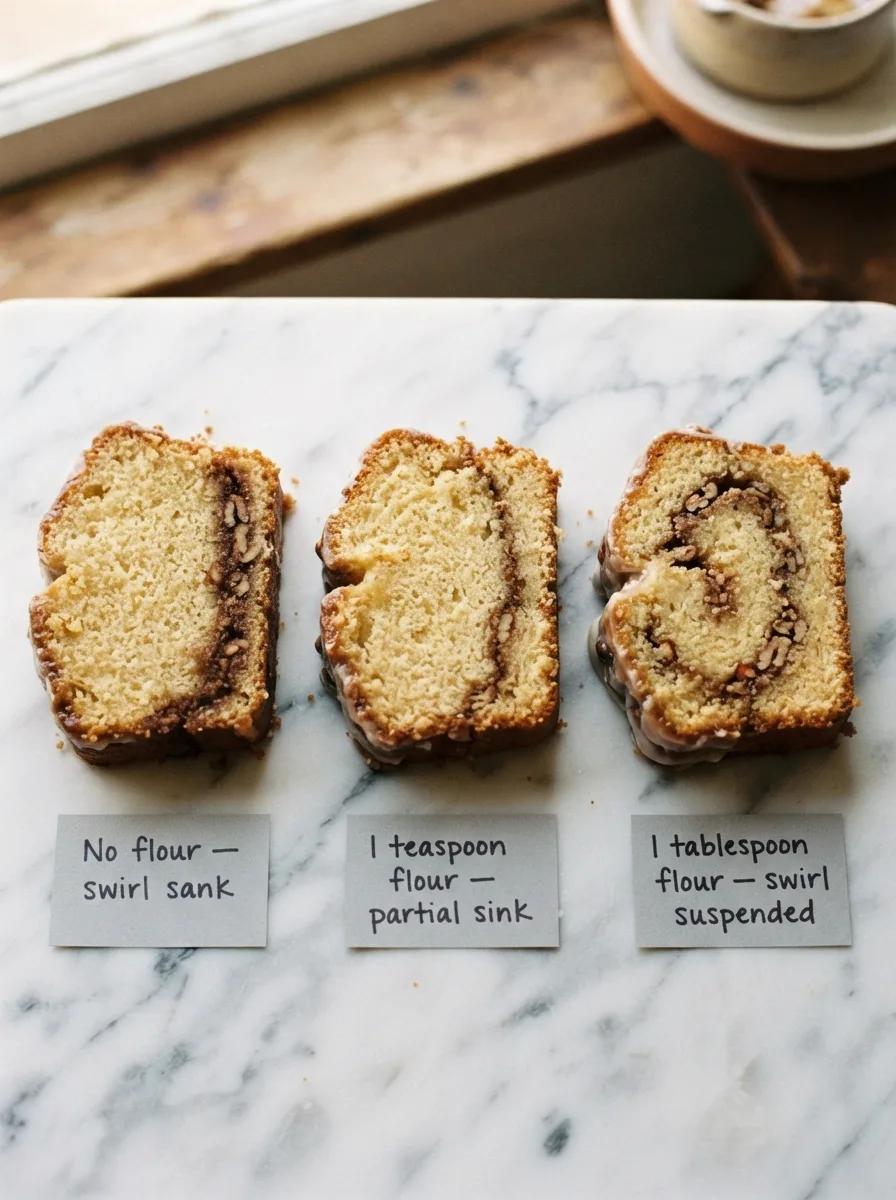
Test 1 — No flour in the filling: The brown sugar and butter melted completely during baking and the whole swirl dropped to the bottom of the pan as a dense, almost fudgy layer. It tasted fine but looked like a mistake when sliced.
Test 2 — 1 teaspoon of flour: Better, but not solved. Part of the swirl held its position higher in the batter; part of it still sank. Inconsistent results, slice to slice.
Test 3 — 1 tablespoon of flour: The flour thickens the melted butter and sugar just enough that the filling stays put as the batter rises around it during baking. Every slice from this batch showed a clean, even swirl.
The takeaway: the fat-to-flour ratio in the filling is the most important variable in this whole recipe. Get that right and everything else is forgiving.
How to Make Pecan Caramel Cinnamon Roll Pound Cake
Before you start: Bring the butter, cream cheese, sour cream, and eggs to true room temperature — at least an hour on the counter. Cold ingredients will not cream properly, and you’ll end up with a lumpy batter no amount of mixing fixes. Preheat the oven to 325°F (163°C).
Step 1 — Prep the pan
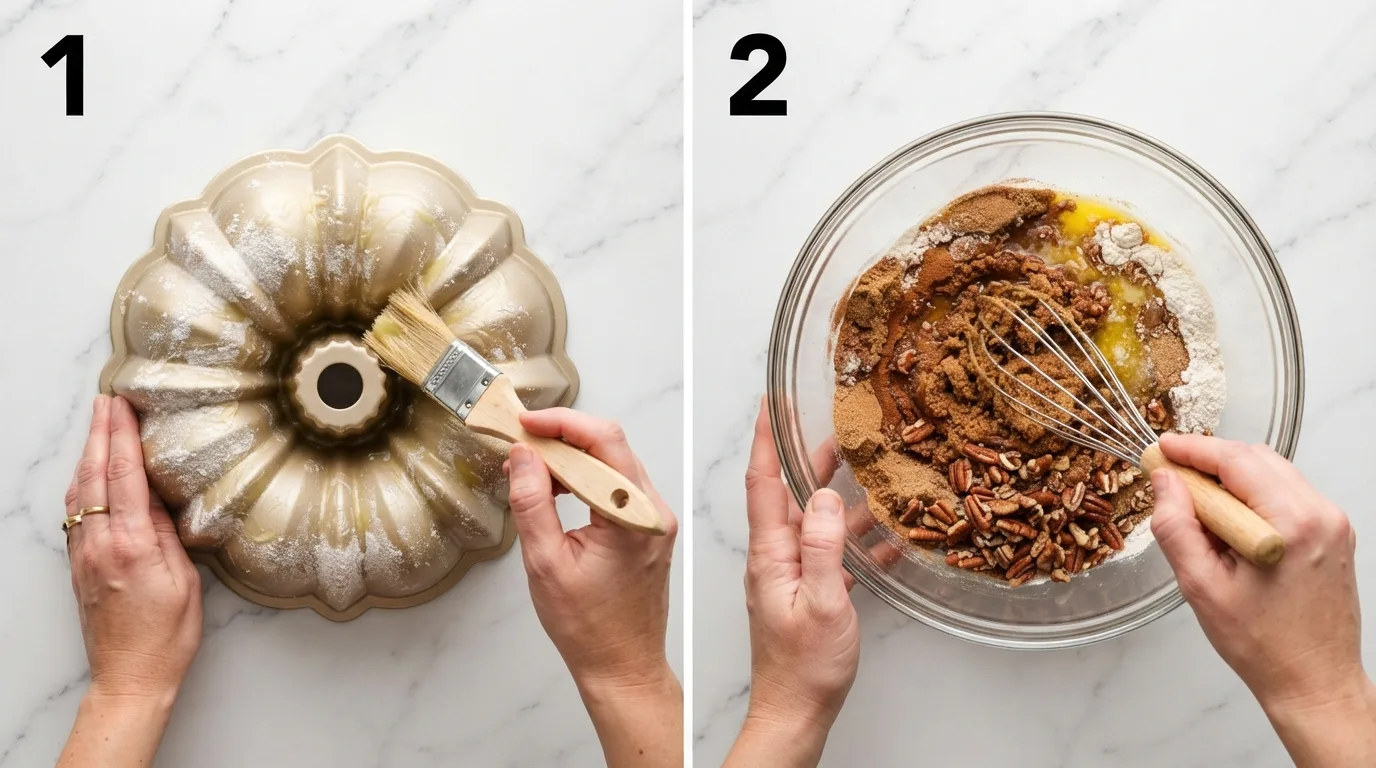
Grease the bundt pan thoroughly, getting into every ridge, then dust lightly with flour or a nonstick baking spray with flour built in. Missing even one ridge is the most common reason bundt cakes stick.
Step 2 — Make the cinnamon pecan swirl filling
In a small bowl, whisk together the brown sugar, cinnamon, and the tablespoon of flour first — mixing the flour into the dry ingredients before adding butter keeps it from clumping. Stir in the melted butter and chopped toasted pecans until you have a thick, spreadable paste, not a runny liquid.
Step 3 — Cream the butter, cream cheese, and sugars
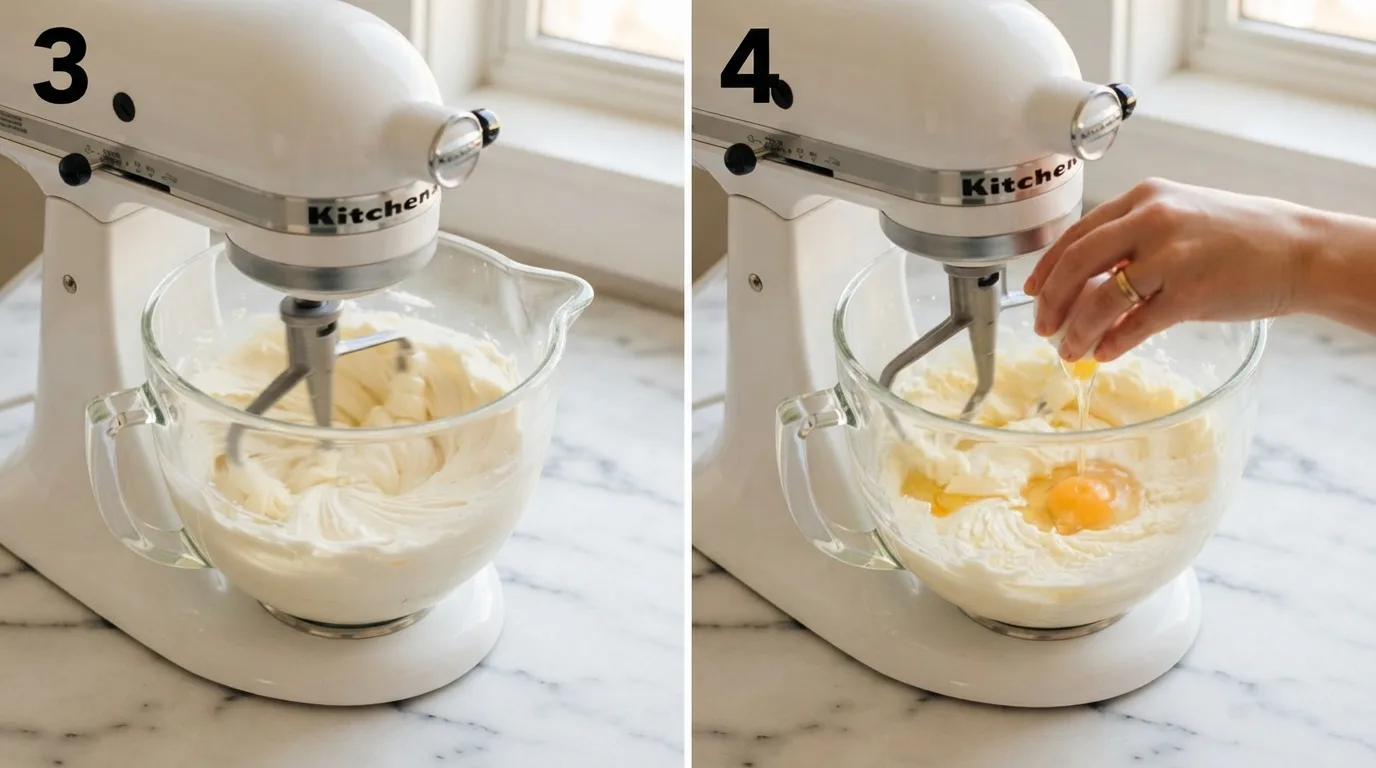
Beat the butter and cream cheese together on medium speed for about 2 minutes, until smooth and lighter in color. Add the granulated sugar and continue beating for another 3 minutes — this step is doing more work than it looks like; it’s building the air pockets that keep the crumb from turning dense and gummy.
Step 4 — Add the eggs and vanilla
Add the eggs one at a time, beating for about 20 seconds after each before adding the next. The batter may look slightly curdled after the first egg or two — that’s normal, it smooths back out once the flour goes in. Mix in the vanilla last.
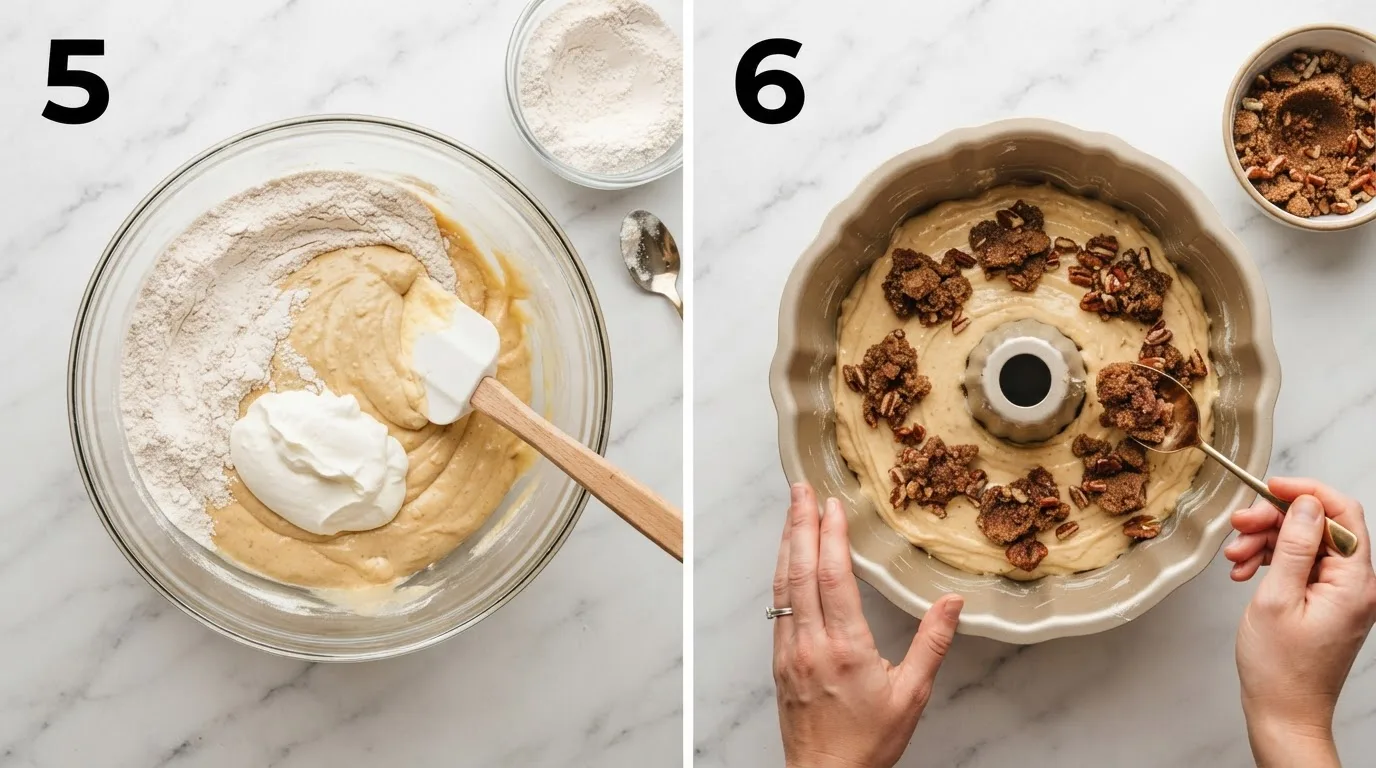
Step 5 — Alternate the dry ingredients and sour cream
Whisk together the flour, baking powder, and salt in a separate bowl. Add this to the batter in three additions, alternating with the sour cream in two additions, starting and ending with the flour. Mix on low speed just until each addition disappears — overmixing here is what makes pound cake tough instead of tender.
Step 6 — Layer the batter and swirl in the pan
Spread about a third of the batter into the prepared pan. Drop half the cinnamon-pecan filling over it in small spoonfuls (don’t spread it edge to edge — leave a little border so it doesn’t touch the pan sides). Repeat with another third of batter and the rest of the filling, then top with the last of the batter and smooth the surface.
Step 7 — Bake
Bake for 60–70 minutes, until a toothpick inserted into the thickest part of the cake (avoiding the swirl pockets) comes out with just a few moist crumbs, not wet batter. The top should be deep golden and spring back gently when pressed. If the top browns too fast before the center is done, loosely tent it with foil after 40 minutes.
Step 8 — Cool completely before removing from the pan
Let the cake cool in the pan on a wire rack for 20 minutes, then invert it onto the rack to cool the rest of the way — at least an hour. Removing it too early is the most common way bundt cakes break in half.
Step 9 — Make the caramel pecan topping
Warm the caramel sauce gently in a small saucepan just until pourable, then stir in the toasted pecans. Pour this over the cooled cake while the caramel is still warm so it settles into the ridges instead of sitting on top in a hard layer.
Step 10 — Glaze and finish
Whisk the softened cream cheese, powdered sugar, milk, and vanilla together until smooth and drizzly — thin it with an extra teaspoon of milk if it’s too thick to pour. Drizzle over the caramel pecan layer and let it set for about 10 minutes before slicing.
Pro Tips for Perfect Pecan Caramel Cinnamon Roll Pound Cake
Tip 1: Weigh your flour. 280 grams of flour every time, regardless of how it’s scooped. Packed flour is the single most common reason pound cakes turn out dry and heavy.
Tip 2: Room temperature really does mean room temperature. Cold cream cheese and butter will not cream smoothly no matter how long you beat them — you’ll get a lumpy batter that bakes into a dense, uneven crumb.
Tip 3: Don’t let the cinnamon filling touch the pan sides. Leaving a small border when you layer the filling keeps it from leaking out and burning against the hot pan.
Tip 4: Pour the caramel while it’s still warm, and the cake is fully cool. Warm caramel on a cool cake sinks into the ridges beautifully. Warm caramel on a warm cake just slides off.
Variations and Substitutions
Dietary Variations:
- Gluten-free: A 1:1 gluten-free flour blend works in both the cake and the swirl filling. The crumb will be very slightly more tender and less springy, but the swirl still stays suspended with the same tablespoon of flour trick.
- Dairy-free: Swap the butter for a stick-style dairy-free butter and the cream cheese for a dairy-free cream cheese alternative in both the batter and the glaze. The texture is a touch less rich, but it works.
Flavor Variations:
- Apple cinnamon version: Fold 1 cup of finely diced apple into the middle layer of batter along with the cinnamon swirl for an apple-cinnamon-roll effect.
Ingredient Substitutions:
- Pecans → walnuts, same amount, toasted the same way
- Store-bought caramel sauce → homemade caramel (butter, brown sugar, and heavy cream simmered 8 minutes)
If you like layered breakfast bakes, my cheesecake bread uses a similar swirl-and-glaze approach and is worth trying next.
Troubleshooting
Why did my cinnamon swirl sink to the bottom?
Most likely the filling didn’t have enough flour to hold its structure once the butter and sugar melted in the oven. Stick to exactly 1 tablespoon of flour in the filling — this is the fix I landed on after three tests (see the Controlling section above).
Why is the center of my cake still gummy after the recommended bake time?
This usually means the oven ran cooler than the dial says, or the pan wasn’t fully preheated-oven hot when it went in. Tent the top with foil and give it another 10–15 minutes, checking with a toothpick in the thickest part, away from the swirl.
My glaze slid right off instead of setting on top — what happened?
The cake or the caramel layer was still too warm. The cream cheese glaze needs a mostly-cool surface to set properly. Let the caramel layer firm up for about 10 minutes before adding the glaze.
Storage and Make-Ahead
Counter: Covered, at room temperature, for up to 3 days. The glaze will soften slightly but the cake stays moist.
Refrigerator: Up to 6 days in an airtight container — the cream cheese glaze means this cake should be refrigerated for longer storage.
Freeze: Wrap the un-glazed, un-topped cake tightly in plastic then foil, and freeze up to 3 months. Add the caramel pecan topping and glaze fresh after thawing.
Reheating: A 10-second zap in the microwave brings a single slice back to soft, warm-from-the-oven texture.
Make-Ahead: Bake the cake up to 2 days ahead and store it un-topped at room temperature, wrapped well. Add the caramel and glaze the day you plan to serve it.
Frequently Asked Questions
Q: Can I make this in loaf pans instead of a bundt pan? A: Yes — divide the batter and filling between two 9×5-inch loaf pans and reduce the bake time to about 45–50 minutes, checking with a toothpick.
Q: Can I use a boxed cake mix instead of a from-scratch batter? A: You can, but the texture will be lighter and less dense than a true pound cake, and the swirl may sink more easily since box mixes have thinner batter.
Q: Do I have to toast the pecans first? A: You don’t have to, but raw pecans taste noticeably flatter next to the caramel. Five minutes in a dry skillet makes a real difference.
Q: Can I make this ahead for a holiday breakfast? A: Yes — bake it up to 2 days ahead, store un-topped at room temperature, and add the caramel pecan topping and glaze the morning you’re serving it.
Q: Is this recipe gluten-free friendly? A: With a 1:1 gluten-free flour blend in both the cake and the swirl filling, yes — see the Variations section above for details.
Q: Why does my cinnamon-pecan filling look runny before I use it? A: It should be thick and paste-like, not liquid. If it’s runny, whisk in an extra teaspoon of flour before layering it into the batter.
More Pound Cake and Baking Recipes You’ll Love
- Cheesecake Bread — a similar swirl-and-glaze technique in loaf form
- Dolly’s Chicken and Stuffing Casserole — for when you need a savory make-ahead dish to pair with a sweet breakfast spread
- Cheesy Ranch Potatoes and Sausage — a hearty, crowd-feeding side for a brunch table
- Banana Tempura — another caramelized, dessert-adjacent treat if you love the sticky-sweet combination here
Foolproof Pecan Caramel Cinnamon Roll Pound Cake
Ingredients
For the Cinnamon Pecan Swirl:
- 3/4 cup brown sugar, packed
- 1 tablespoon all-purpose flour
- 2 teaspoon ground cinnamon
- 1/4 cup unsalted butter, melted
- 1/2 cup toasted pecans, chopped
For the Pound Cake Batter:
- 1 cup (2 sticks) unsalted butter, room temperature
- 8 oz cream cheese, room temperature
- 11/2 cup granulated sugar
- 4 large eggs, room temperature
- 2 teaspoon vanilla extract
- 21/4 cup all-purpose flour
- 1 teaspoon baking powder
- 1/2 teaspoon salt
- 1/2 cup sour cream, room temperature
For the Caramel Pecan Topping:
- 3/4 cup caramel sauce
- 1/2 cup toasted pecans, chopped
For the Cream Cheese Glaze:
- 4 oz cream cheese, softened
- 1 cup powdered sugar
- 2 –3 tablespoons milk
- 1/2 teaspoon vanilla extract
Instructions
- Preheat the oven to 325°F (163°C). Grease and flour a 10-cup bundt pan thoroughly, getting into every ridge.
- Whisk the brown sugar, flour, and cinnamon together, then stir in the melted butter and chopped pecans to form a thick paste. Set aside.
- Beat the butter and cream cheese together for about 2 minutes until smooth. Add the granulated sugar and beat for 3 more minutes.
- Add the eggs one at a time, beating briefly after each. Mix in the vanilla.
- Whisk the flour, baking powder, and salt together. Add to the batter in three additions, alternating with the sour cream in two additions, mixing on low just until combined.
- Spread a third of the batter into the pan. Dollop half the cinnamon-pecan filling over it, leaving a border from the pan sides. Repeat with another third of batter and the remaining filling, then top with the last of the batter.
- Bake 60–70 minutes, until a toothpick in the thickest part comes out with a few moist crumbs.
- Cool in the pan on a wire rack for 20 minutes, then invert onto the rack and cool completely, at least 1 hour.
- Warm the caramel sauce until pourable, stir in the pecans, and pour over the cooled cake.
- Whisk the cream cheese, powdered sugar, milk, and vanilla until smooth. Drizzle over the caramel layer and let set 10 minutes before slicing.
Notes
- The tablespoon of flour in the cinnamon-pecan filling is the key to keeping the swirl suspended instead of sunk — do not skip it.
- Weigh the flour (280g) for the most consistent texture; packed flour makes the cake dense and dry.
- All dairy ingredients should be at true room temperature before mixing, or the batter will not cream smoothly.
- For a gluten-free version, substitute a 1:1 gluten-free flour blend in both the cake and the swirl filling.
- For a dairy-free version, use a stick-style dairy-free butter and dairy-free cream cheese in both the batter and glaze.
- The un-topped, un-glazed cake freezes well for up to 3 months; add the caramel and glaze fresh after thawing.
- Store leftovers in the refrigerator for up to 6 days due to the cream cheese glaze.
- Toast the pecans in a dry skillet for about 5 minutes before using in both the swirl and the topping for the best flavor.