Foolproof Rice Florentine (Tested 3x)

The first time I made rice florentine, I didn’t actually know what “florentine” meant in a recipe title — I just knew my grandmother’s church cookbook had a stained, dog-eared copy of it. My first attempt came out soupy in the middle, with a layer of green water pooling under the rice. Not exactly the golden, creamy bake I remembered.
I made this three more times after that, changing one thing each round: how dry the spinach really needed to be, and how many eggs it took to set the center without turning it into a spinach brick. The version below is the one that finally worked — every time.
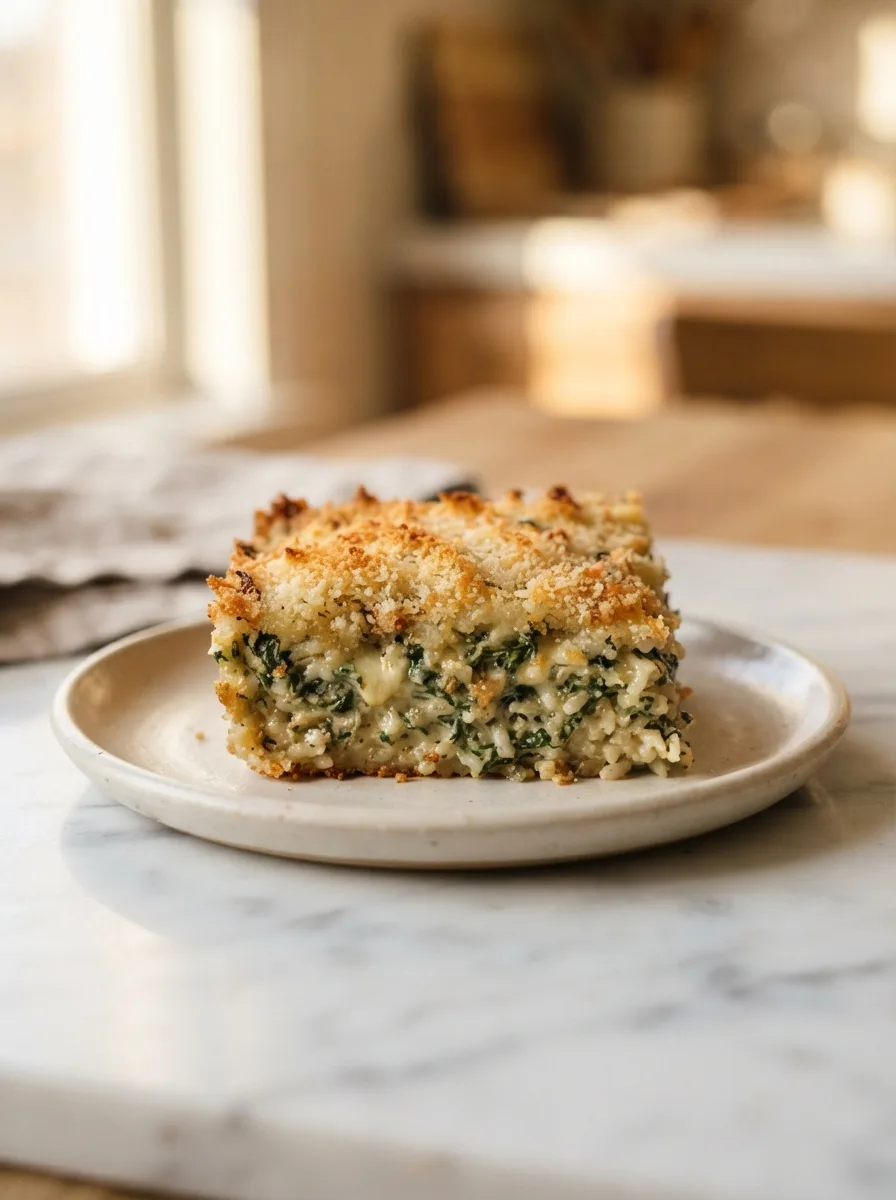
What you get is a rich, savory rice bake with wilted spinach, melted Swiss, and a golden panko top. It holds a clean slice instead of collapsing into mush, and it comes together with ingredients you probably already have.
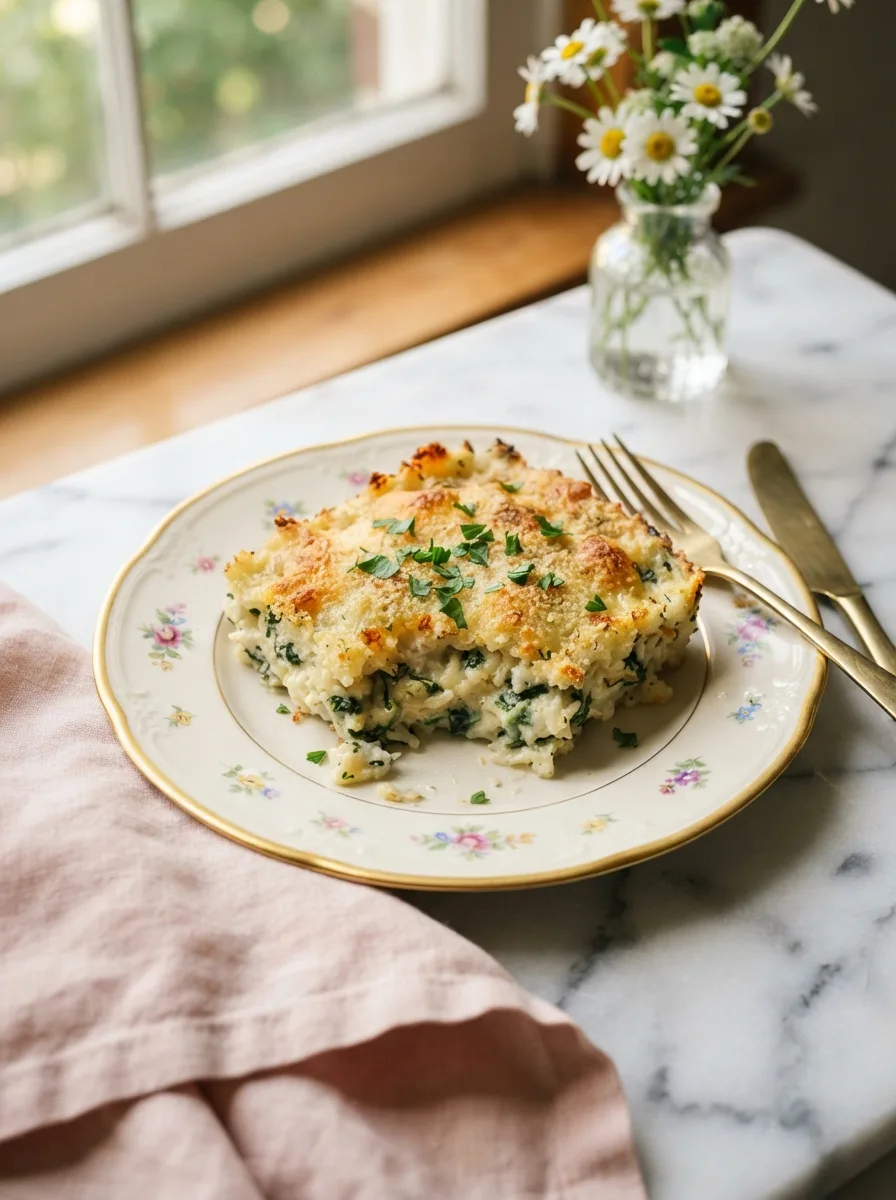
The center sets clean enough to hold a square edge, but the inside stays creamy — closer to a savory rice pudding than a dry casserole. The panko topping toasts up crisp in the last few minutes, which is the part my testers kept going back for seconds of.
★★★★★ “I’ve made spinach rice bakes before that turned into soup by day two. This one held its shape straight out of the fridge. The nutmeg is a small detail but it makes the whole thing taste finished.” — Marisol T., recipe tester (pre-launch)
Why You’ll Love This Rice Florentine
- It holds a clean slice: The egg-to-rice ratio was the whole point of testing this three times — the center sets firm enough to serve in squares, not scoop with a spoon.
- It’s a make-ahead workhorse: Assemble it the night before, refrigerate, and bake it fresh the next day — ideal for a potluck or holiday side.
- It sneaks in a full two pounds of spinach: Between the cream cheese and Swiss, nobody at the table is thinking about how much spinach they just ate.
- One dish feeds six: No sides required if you’re serving it as a light main — it’s rich enough to stand on its own.
Key Ingredients
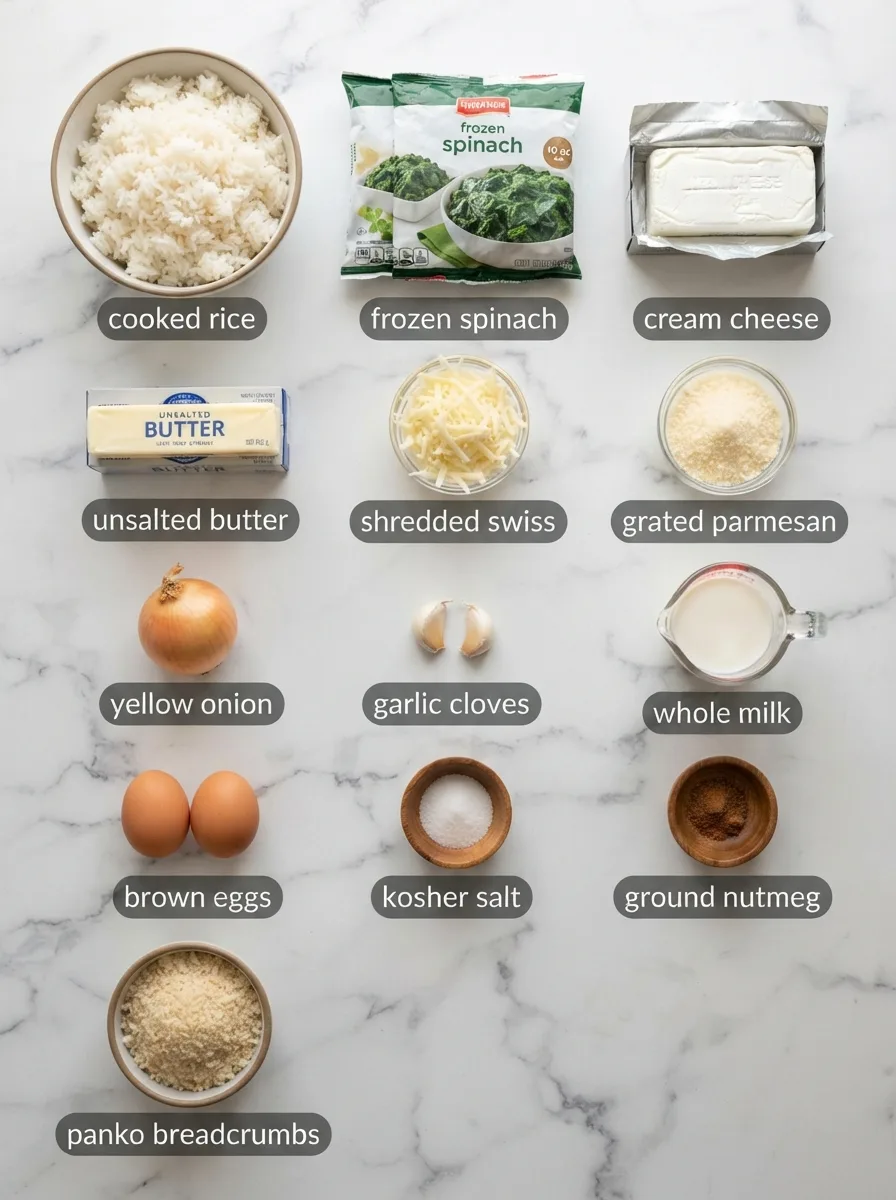
Cooked rice (3 cups, day-old if possible). Freshly cooked rice is full of steam and surface starch, which turns this bake gummy. Rice that’s been in the fridge overnight is drier and holds its shape better once mixed with the eggs.
Frozen chopped spinach (two 10 oz packages). Frozen spinach is more consistent than fresh — it’s already cooked down, so you know exactly how much water you’re dealing with. The catch is that you have to squeeze it dry. Really dry. This is the single biggest variable in whether this recipe turns out creamy or watery.
Cream cheese (8 oz, softened). This is what makes the base rich instead of just “rice with spinach in it.” Cold cream cheese won’t blend in smoothly — let it sit out for 30 minutes before you start.
Swiss cheese (1¼ cups shredded, divided). Swiss melts smooth and has a mild nuttiness that doesn’t fight with the nutmeg. Gruyère is a great substitute if you want something a little more assertive; sharp cheddar works too, though the flavor shifts toward “cheesy casserole” instead of “florentine.”
Eggs (2 large). The eggs are the structural backbone — they’re what let this hold a slice instead of behaving like loose rice pudding. Too few and it stays soupy; too many and it turns dense and eggy. Two is the number that worked across all three tests.
Ground nutmeg (¼ tsp). This is a classic florentine seasoning — a small amount of warm spice that makes cooked spinach taste finished instead of just “vegetable.” Don’t skip it; it’s barely detectable on its own but noticeably absent without it.
Ingredient Note: Squeeze the thawed spinach in a clean kitchen towel, not just a colander. A colander alone leaves behind enough water to turn the whole casserole soupy — twist and wring the towel until you genuinely can’t get another drop out.
Equipment You’ll Need
- 9×13-inch baking dish — glass or ceramic works; metal is fine too, just watch the bake time closely since it heats faster.
- Large skillet — for cooking the onion, garlic, and spinach before mixing. A 10–12 inch skillet gives you room to stir without spillage.
- Large mixing bowl — to combine the rice, spinach, and cheeses. No stand mixer needed here; a sturdy spoon or spatula does the job.
- Clean kitchen towel or fine-mesh strainer — for squeezing the spinach dry. A towel gets more water out than a strainer alone.
Controlling the Set: Egg Ratio (A Controlled Test)
I tested this recipe three times, changing only the number of eggs each round, to figure out exactly how firm the final texture would be.
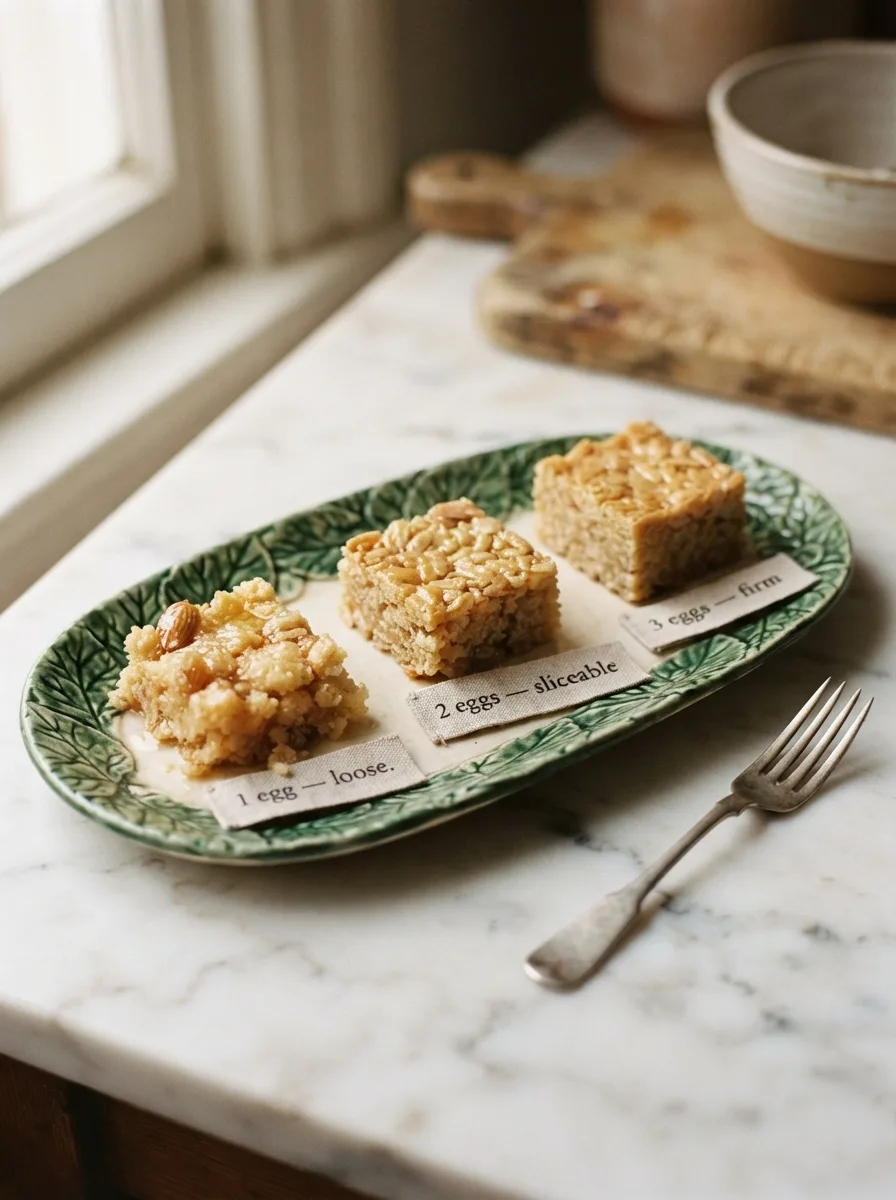
One egg: The center stayed loose and creamy, closer to a spoonable rice pudding. Good for a casual side dish, but it wouldn’t hold a clean square when I cut it.
Two eggs (the recipe below): This set enough to slice into clean squares while staying custardy in the middle. This is the texture I was after, and it’s the version in the recipe card.
Three eggs: Firm and dense, more like a frittata than a casserole. It sliced the cleanest of the three, but the eggy flavor started to compete with the spinach and cheese.
The takeaway: two eggs is the sweet spot between “holds a slice” and “still tastes like rice florentine instead of an egg bake.” If you genuinely want it firmer for slicing ahead, three eggs works — just expect a more eggy flavor.
How to Make Rice Florentine
Before you start: Preheat your oven to 350°F and butter a 9×13-inch baking dish. Make sure your cream cheese is softened and your spinach is fully thawed — cold cream cheese won’t blend smoothly, and frozen spinach won’t squeeze dry.
Step 1 — Cook the onion and garlic
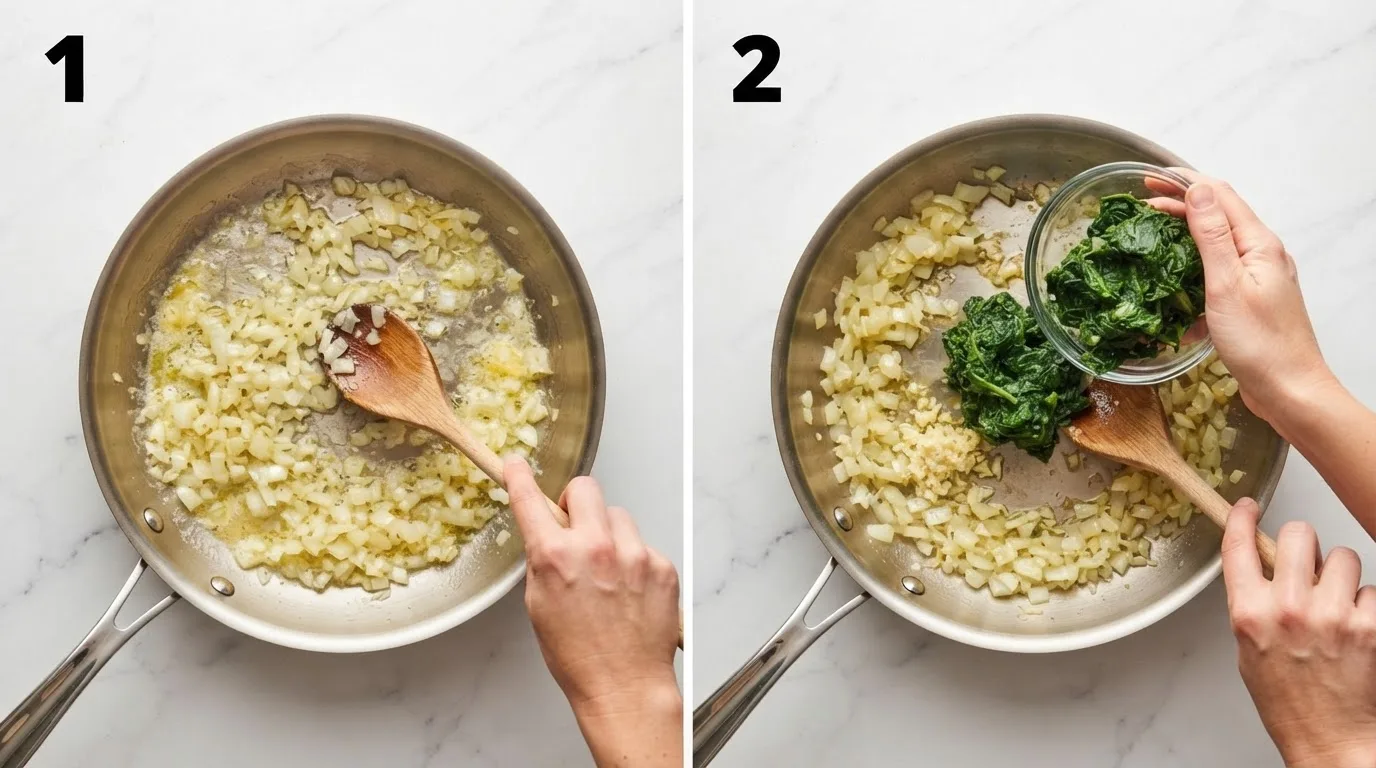
Melt 4 tablespoons of butter in a large skillet over medium heat. Add the diced onion and cook for 4–5 minutes, until it’s soft and translucent, not browned. Add the minced garlic and cook for another minute, just until fragrant.
Step 2 — Wilt and dry the spinach in the pan
Add the squeezed spinach to the skillet with the onion and garlic. Stir to combine and cook for another 2 minutes — this step evaporates any last bit of moisture that survived the squeeze. Remove from heat and let it cool slightly.
Step 3 — Build the rice and cheese base
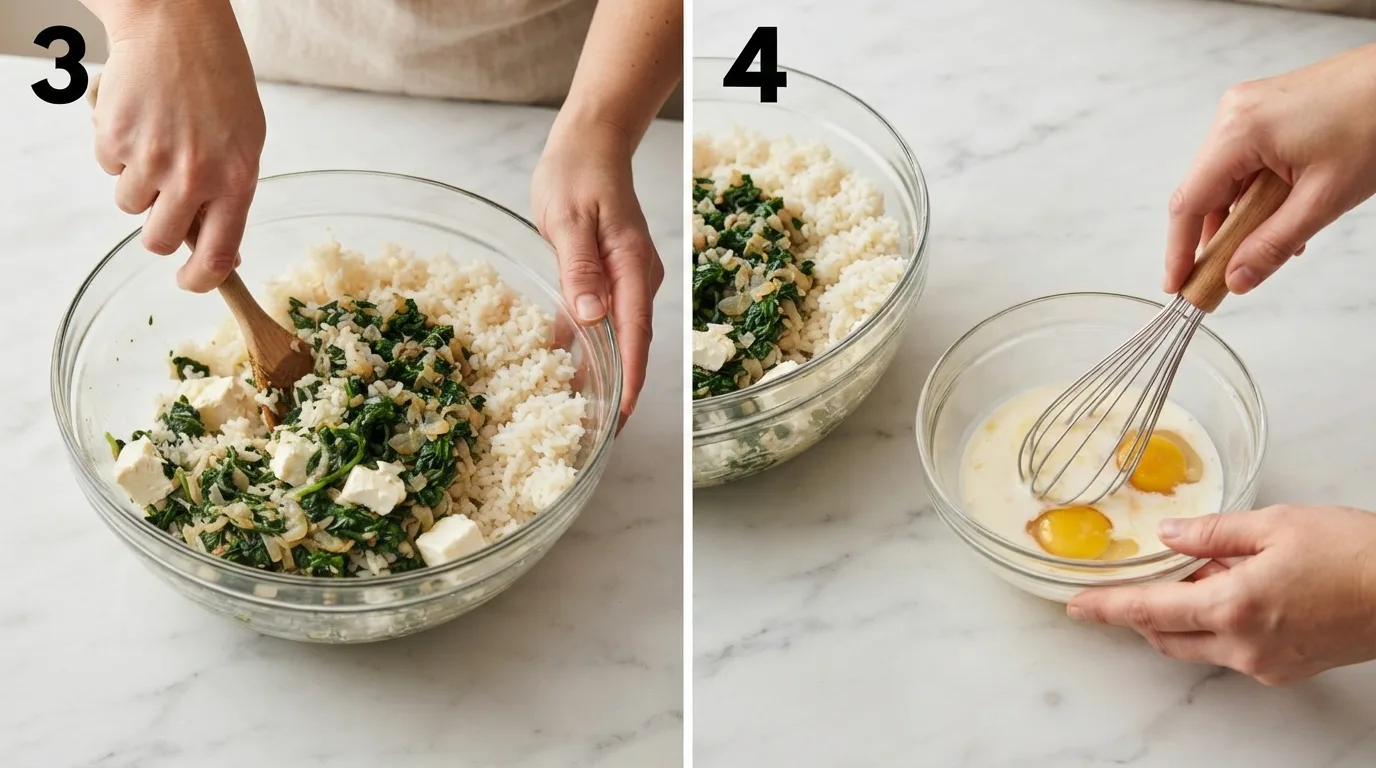
In a large mixing bowl, combine the cooked rice, the spinach mixture, the softened cream cheese, 1 cup of the Swiss, and the Parmesan. Stir until the cream cheese is fully broken up and evenly distributed — this takes a minute or two of real effort, since cold spots of cream cheese will otherwise show up in the final bake. Season with the nutmeg, salt, and pepper.
Step 4 — Add the eggs
Whisk the eggs and milk together in a small bowl until smooth. Pour into the rice mixture and fold it in with a spatula until fully combined — no streaks of egg should be visible. This is the step that determines whether your center sets or stays loose, so make sure it’s evenly mixed all the way to the bottom of the bowl.
Step 5 — Assemble and top
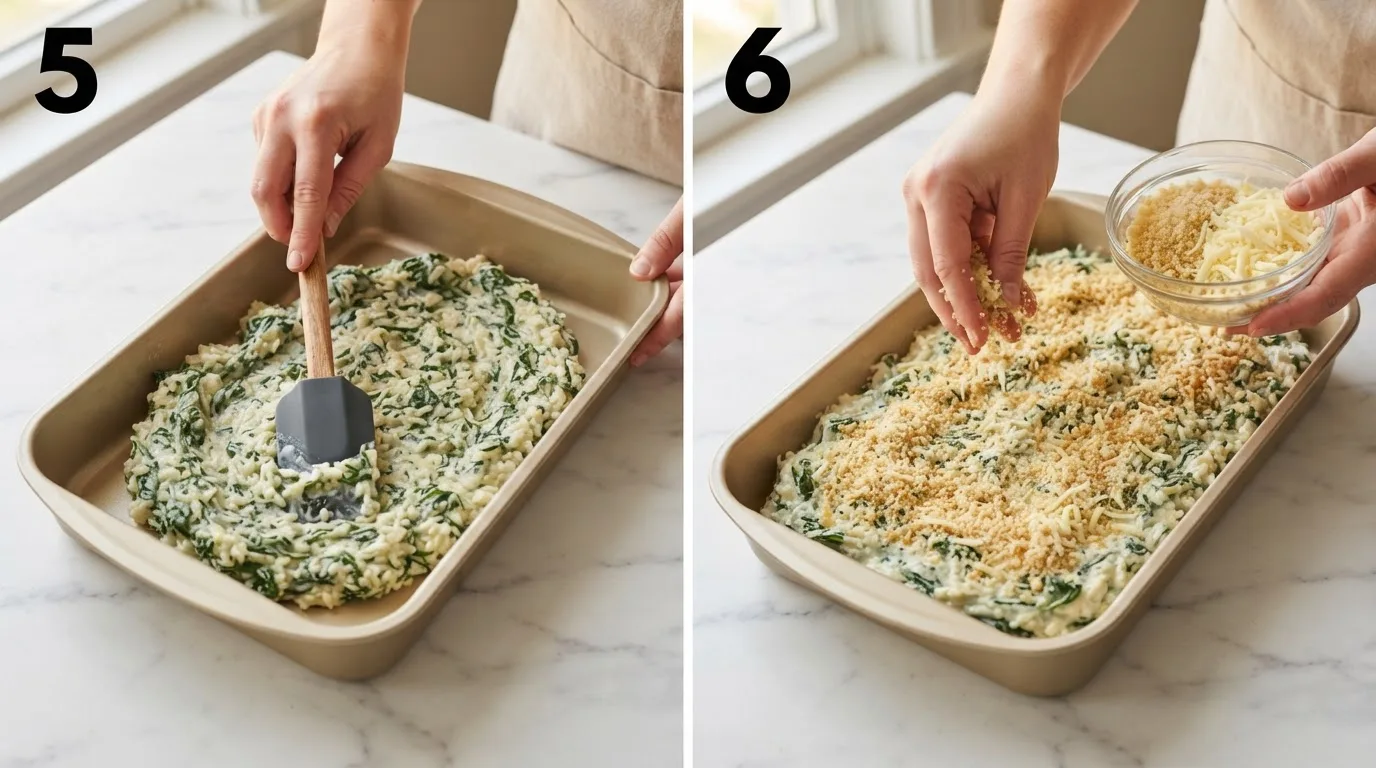
Transfer the mixture into your prepared baking dish and spread it into an even layer with a spatula. In a small bowl, toss the panko breadcrumbs with 2 tablespoons of melted butter, then sprinkle it evenly over the top along with the remaining ¼ cup of Swiss.
Step 6 — Bake until set and golden
Bake for 35–40 minutes, until the center is set (it should barely jiggle when you nudge the dish) and the top is golden brown. If the top isn’t as golden as you’d like by the time the center is set, broil for 1–2 minutes, watching closely — panko goes from golden to burnt fast. Let it rest for 10 minutes before cutting; this rest is what lets it hold a clean square instead of collapsing when you serve it.
Pro Tips for Perfect Rice Florentine
Tip 1: Squeeze the spinach twice. Squeeze it once in the colander after thawing, then again in a dry towel right before you add it to the skillet. You’ll be surprised how much more water comes out the second time.
Tip 2: Use rice that’s actually cold. Rice straight off the stove is still releasing steam, which adds moisture you don’t want. Rice that’s been refrigerated for a few hours (or overnight) is firmer and mixes in cleaner.
Tip 3: Don’t skip the rest time. Cutting into this straight out of the oven means the center hasn’t finished setting — it’ll look done on top but ooze when you cut it. Ten minutes makes a real difference.
Tip 4: Taste the rice mixture before you bake it. Rice absorbs seasoning much less than you’d think, so the mixture should taste slightly saltier than you want the final dish to be — the panko topping is unsalted and dilutes it slightly as you eat.
Variations and Substitutions
Dietary Variations:
- Gluten-free: Swap the panko for a gluten-free breadcrumb or crushed gluten-free crackers, or skip the topping entirely and finish with just the extra Swiss cheese under the broiler.
- Vegetarian-friendly as written: This recipe has no meat in it already, but if you want to bulk it up, cooked crumbled bacon or diced ham folded into the rice mixture in Step 3 works well.
Flavor Variations:
- Cheddar instead of Swiss: Swap the Swiss for an equal amount of sharp cheddar for a more assertive, tangy flavor — it shifts the dish closer to a standard cheesy rice casserole than a classic florentine.
- Add mushrooms: Sauté 8 oz of sliced mushrooms with the onion in Step 1 for an earthier, heartier version.
Ingredient Substitutions:
- Fresh spinach can replace frozen — you’ll need about 2 pounds fresh, wilted down in the skillet and squeezed just as dry as the frozen version.
- Brown rice works in place of white, though the texture will be slightly chewier and the bake may need an extra 5 minutes to set.
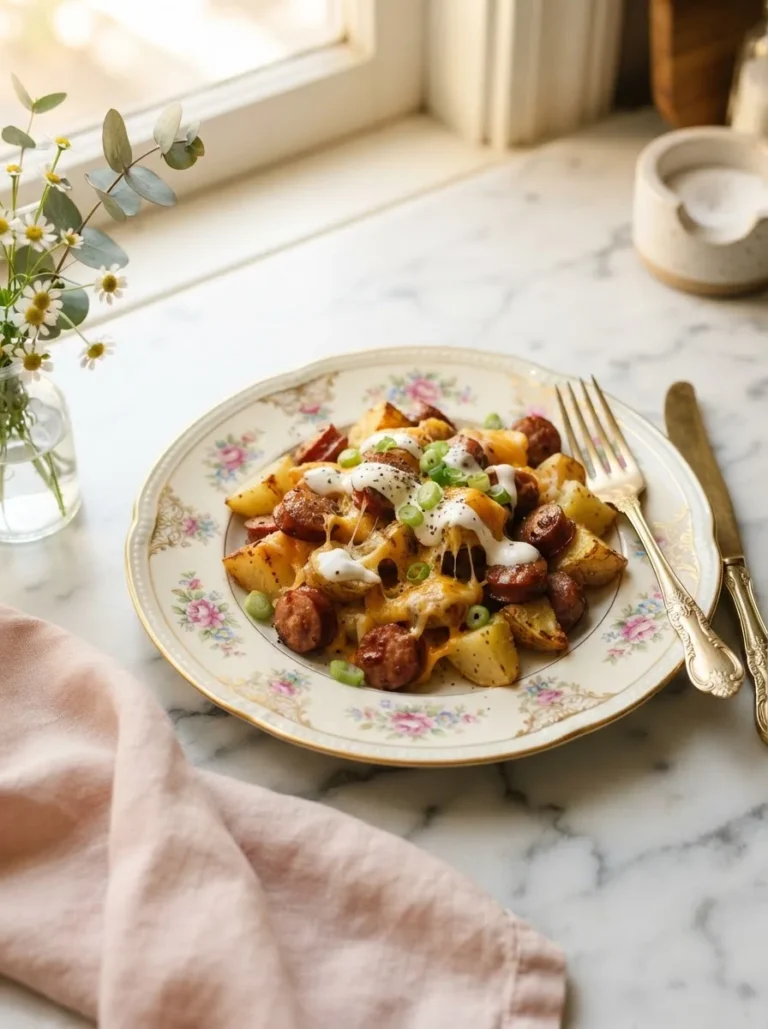
Rice florentine pairs well as a side dish if you want something more filling on the table — cheesy ranch potatoes and sausage is another rich, cheese-forward casserole that works well alongside it for a bigger spread.
Troubleshooting
Why is my rice florentine watery in the middle?
This almost always means the spinach wasn’t squeezed dry enough. Even a quarter cup of extra water thrown into the mix is enough to keep the center from setting properly. Next time, squeeze the spinach in a towel, twisting until no more water comes out, and squeeze it a second time right before adding it to the skillet.
Why did the top crack or sink after baking?
A cracked or sunken top usually means it was overbaked, or it was pulled from the oven and cut before resting. The center keeps cooking slightly as it rests — give it the full 10 minutes before cutting, and check for doneness at the earlier end of the bake time next time.
Why does mine taste bland?
Rice absorbs seasoning more than you’d expect, so if the rice mixture tasted properly seasoned before baking, the final dish often tastes underseasoned once it’s diluted by the unsalted panko topping. Taste the mixture before it goes in the oven — it should taste slightly saltier than what you want the finished bake to taste like.
Storage and Make-Ahead
Counter: Not recommended for more than 2 hours due to the dairy and eggs — refrigerate promptly after serving.
Refrigerator: Store covered for up to 4 days. The texture actually firms up nicely after a day in the fridge, which makes it easy to cut into clean squares for leftovers.
Freeze: Freeze the fully baked and cooled casserole tightly wrapped in plastic and foil for up to 3 months. Thaw overnight in the refrigerator before reheating.
Reheating: Cover with foil and reheat in a 325°F oven for 15–20 minutes, or until warmed through. Individual portions can go in the microwave for 1–2 minutes, though the panko topping won’t stay crisp that way.
Make-Ahead: Assemble the casserole completely (through Step 5) up to 24 hours in advance, cover, and refrigerate unbaked. Add 5–10 minutes to the bake time if it’s going into the oven cold.
Frequently Asked Questions
Q: What does “florentine” mean in a recipe name? A: In cooking, “florentine” almost always signals a dish made with spinach, often seasoned with a touch of nutmeg and finished with a rich, cheesy sauce or base. It’s not a specific technique so much as a style — this rice florentine follows that same pattern with rice as the base instead of eggs or fish.
Q: Can I use fresh spinach instead of frozen? A: Yes. You’ll need about 2 pounds of fresh spinach, wilted down in the skillet with the onion and garlic, then squeezed just as dry as you would frozen. Fresh spinach reduces dramatically in volume once cooked, so don’t be surprised how little it looks like once wilted.
Q: Can I make rice florentine ahead of time? A: Yes — assemble it completely up through adding the topping, cover, and refrigerate for up to 24 hours before baking. Add 5–10 minutes to the bake time since it’s starting cold.
Q: Can I freeze rice florentine? A: Yes, after it’s fully baked and cooled. Wrap it tightly and freeze for up to 3 months, then thaw in the fridge overnight before reheating in a covered dish in the oven.
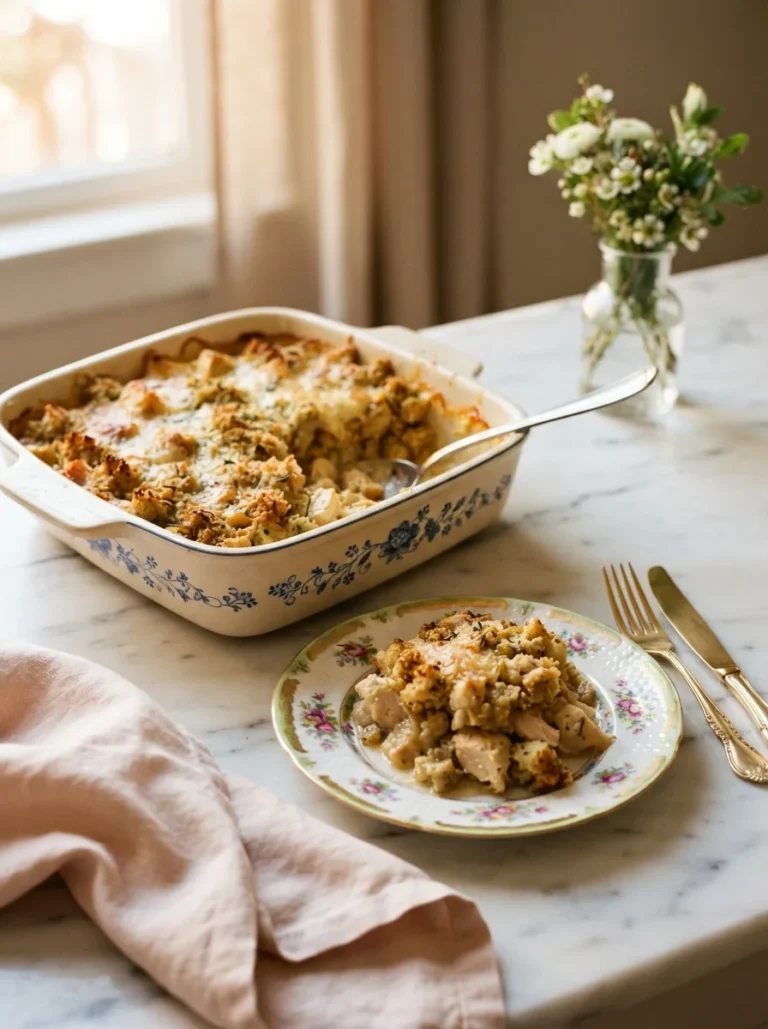
Q: What should I serve with rice florentine? A: It’s rich enough to be a light main on its own, but it also works well as a side next to roasted chicken or ham. If you want a full comfort-food spread, dolly’s chicken and stuffing casserole makes a great pairing for a potluck table.
Q: Why is my rice florentine mushy instead of holding its shape? A: This usually comes down to two things: rice that was too fresh and steamy when mixed in, or spinach that wasn’t squeezed dry enough. Use rice that’s been refrigerated for at least a few hours, and squeeze the spinach twice before adding it.
More Comfort Food Recipes You’ll Love
- Cheesecake Bread — a sweet swirled loaf that makes a great dessert follow-up to a savory casserole dinner.
- Dolly’s Chicken and Stuffing Casserole — another baked, make-ahead-friendly comfort dish perfect for a crowd.
- Cheesy Ranch Potatoes and Sausage — a hearty, cheese-loaded side that pairs naturally with rice florentine.
- Banana Tempura — a crispy, sweet finish if you’re planning out a full menu around this casserole.

Foolproof Rice Florentine (Tested 3x)
Ingredients
For the Rice and Spinach Base:
- 3 cup cooked long-grain white rice, cooled (preferably day-old)
- 2 (10 oz) packages frozen chopped spinach, thawed and squeezed dry
- 4 tablespoon unsalted butter
- 1 small yellow onion, finely diced
- 2 clove garlic, minced
- 8 oz cream cheese, softened
- 1 cup shredded Swiss cheese
- 1/2 cup grated Parmesan cheese
- 2 large eggs
- 1/2 cup whole milk
- 1/4 teaspoon ground nutmeg
- 3/4 teaspoon kosher salt
- 1/4 teaspoon black pepper
For the Topping:
- 1/2 cup panko breadcrumbs
- 2 tablespoon unsalted butter, melted
- 1/4 cup shredded Swiss cheese
Instructions
- Preheat the oven to 350°F. Butter a 9×13-inch baking dish.
- Melt the butter in a large skillet over medium heat. Add the diced onion and cook 4–5 minutes until soft. Add the garlic and cook 1 minute more.
- Add the squeezed spinach to the skillet and stir to combine with the onion and garlic. Cook 2 minutes to evaporate any remaining moisture, then remove from heat and let cool slightly.
- In a large mixing bowl, combine the cooked rice, spinach mixture, cream cheese, 1 cup Swiss, and Parmesan. Stir until the cream cheese is fully incorporated. Season with nutmeg, salt, and pepper.
- In a small bowl, whisk the eggs and milk together until smooth. Fold into the rice mixture until fully combined, with no visible streaks of egg.
- Transfer the mixture to the prepared baking dish and spread into an even layer.
- Toss the panko with the melted butter, then sprinkle evenly over the top along with the remaining ¼ cup Swiss.
- Bake for 35–40 minutes, until the center is set and the top is golden. Broil 1–2 minutes if extra color is needed, watching closely.
- Rest 10 minutes before cutting into squares and serving.
Notes
- Squeeze the spinach twice — once after thawing, once right before adding it to the skillet. This is the single biggest factor in whether the casserole sets cleanly or turns watery.
- Use rice that’s been refrigerated for at least a few hours rather than fresh off the stove; warm, steamy rice adds excess moisture to the bake.
- For a firmer, more sliceable texture, increase to 3 eggs; for a looser, more spoonable texture, use 1 egg. Two eggs (as written) is the tested sweet spot.
- Make-ahead: assemble through Step 7, cover, and refrigerate up to 24 hours before baking. Add 5–10 minutes to the bake time if starting cold.
- Freeze the fully baked, cooled casserole tightly wrapped for up to 3 months; thaw overnight in the fridge before reheating covered at 325°F.
- Swap Swiss for Gruyère or sharp cheddar depending on how assertive you want the cheese flavor to be.
- If using fresh spinach instead of frozen, use about 2 pounds fresh, wilted and squeezed dry to match the volume of two 10 oz frozen packages.
- This recipe doubles well in a deep 9×13 dish or two standard dishes; add about 10 minutes to the bake time and check the center for doneness before removing.