Deep Hamburger Beef Sausage Bake

The first time I made a deep hamburger beef sausage bake, the potatoes on the bottom layer were still crunchy after an hour in the oven while the cheese on top had gone from golden to scorched. I pulled it out, cut into it anyway (dinner is dinner), and made a mental note: something about how I was layering this was wrong.
I tested this recipe four times after that, changing one thing each round — potato slice thickness, bake time, how much gravy to pour in before covering. The version below is the one that finally gave me tender potatoes, a sauce that clings instead of pools, and a beef-and-sausage layer that actually tastes seasoned instead of just salty.
This is a genuinely deep dish — ground beef, smoked beef sausage, and potato rounds stacked in a 9×13 pan deep enough to hold a full pour of gravy without boiling over. It’s the kind of dinner that feeds six to eight people from one pan and reheats even better the next day.
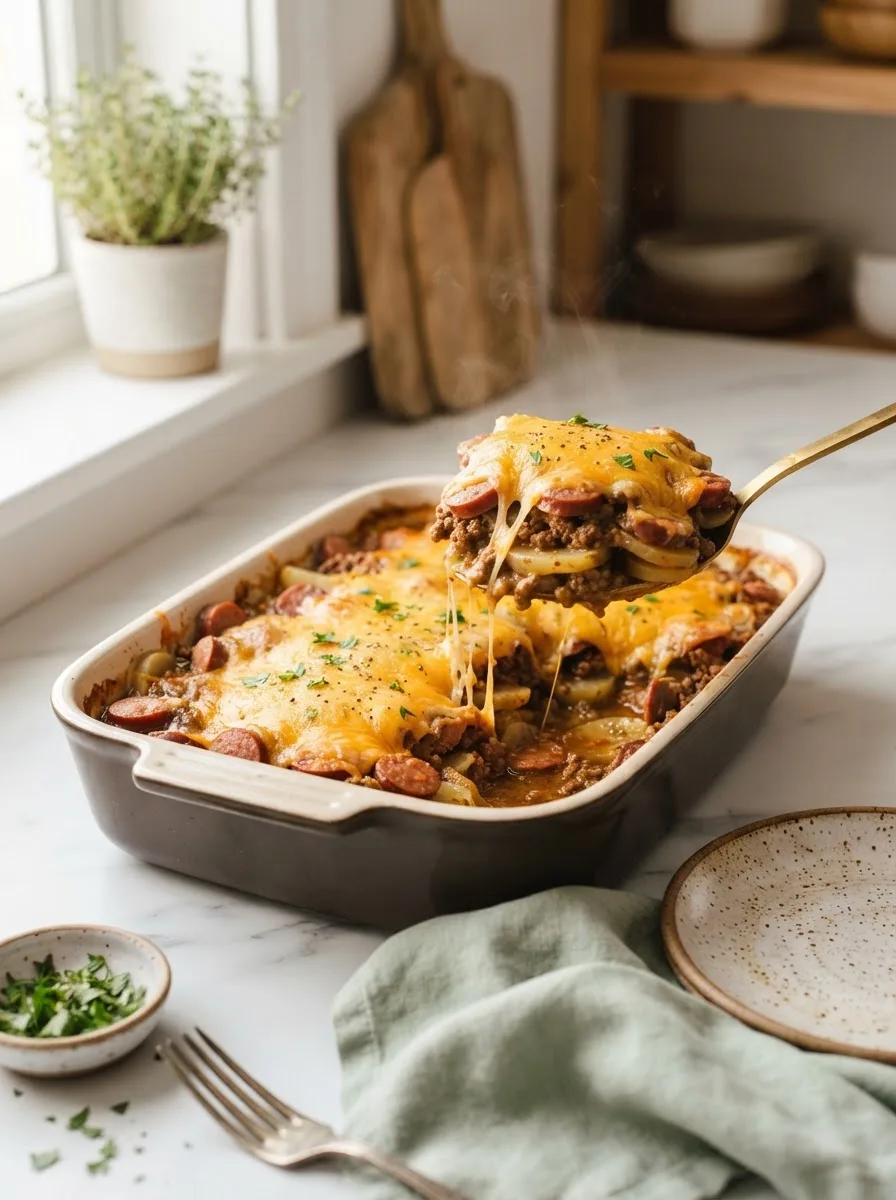
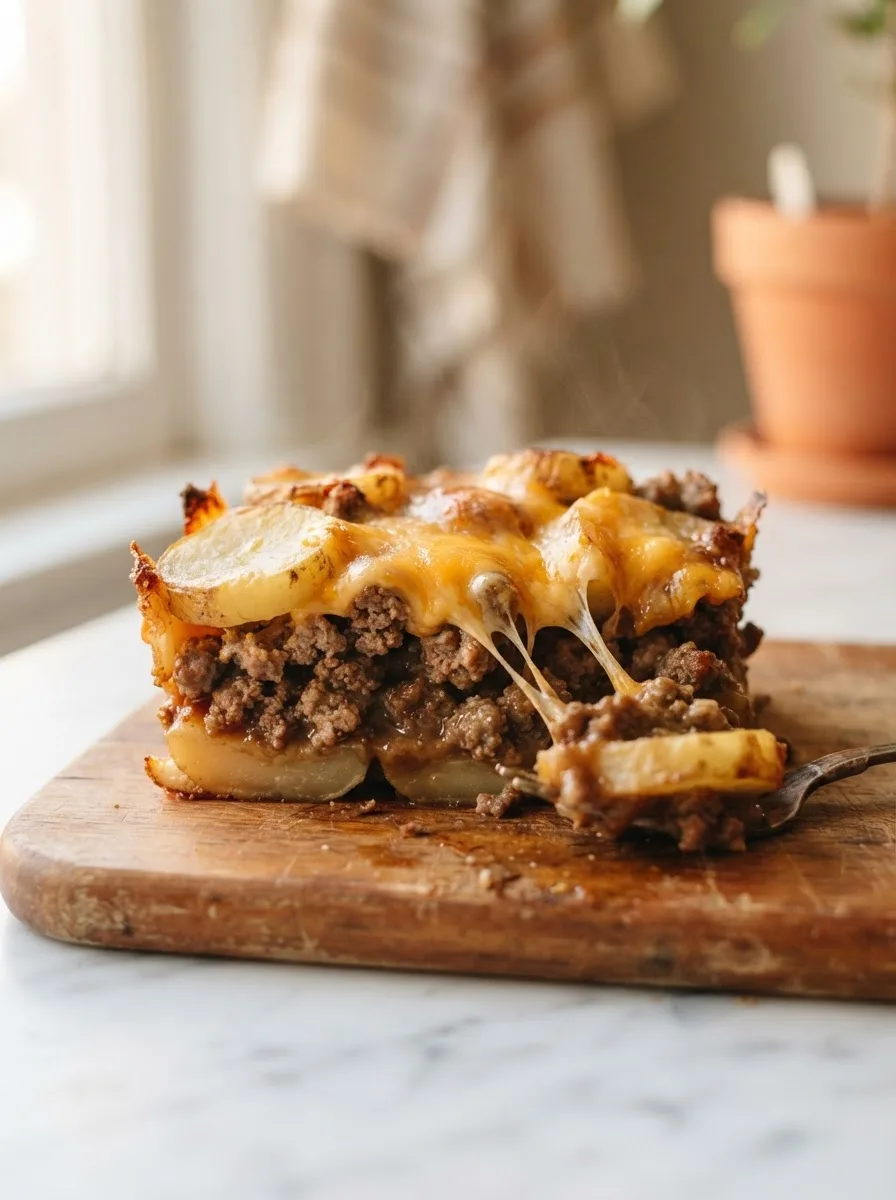
What makes this version different is the gravy-to-potato ratio. Most versions of this bake either drown the potatoes (mushy, gray, sad) or starve them (crunchy centers, dry edges). This one uses a two-stage bake — covered first, uncovered second — so the potatoes fully steam-cook in the gravy before the top gets a chance to brown and crisp.
★★★★★ “I made this exactly as written and my potatoes were fork-tender all the way through — first try. The gravy didn’t separate or go watery like other beef bakes I’ve tried. This is going in the regular rotation.” — Denise R., recipe tester (pre-launch)
Why You’ll Love This Deep Hamburger Beef Sausage Bake
- One dish, real dinner: Beef, sausage, potatoes, and gravy all cook together in one deep pan — no separate side dishes needed.
- Tested for tender potatoes: I dialed in the exact slice thickness and bake time so the potatoes cook through without turning to mush.
- Feeds a crowd: One 9×13 dish serves 6–8 people, and it reheats well for lunches the next day.
- Freezer-friendly: This bake freezes and reheats better than most casseroles because the gravy keeps everything moist instead of drying out.
Key Ingredients
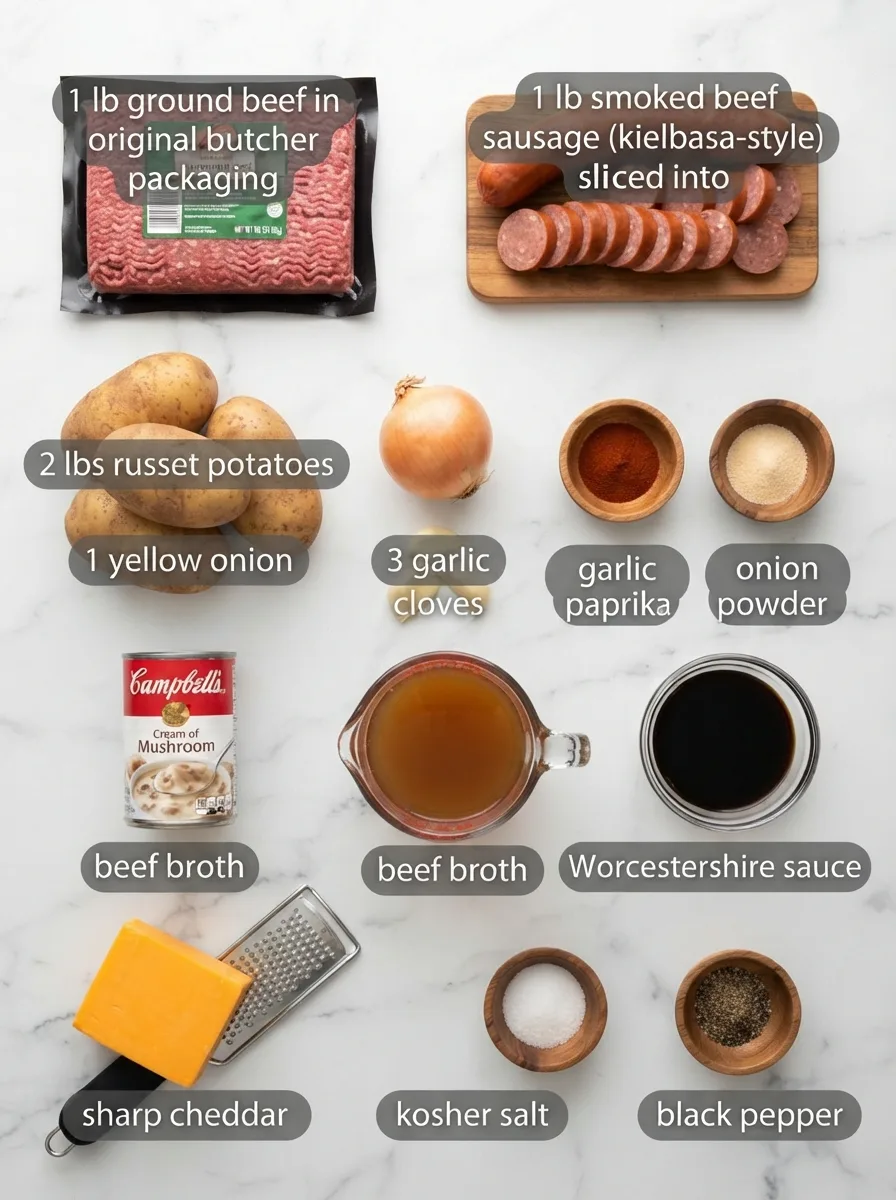
Ground beef (1 lb, 80/20). The 20% fat content matters here — leaner beef leaves the layer dry once the gravy soaks in. If you only have 90/10 on hand, add a tablespoon of butter to the skillet when browning.
Smoked beef sausage (1 lb, sliced into ½-inch rounds). A kielbasa-style beef sausage brings smoky depth that plain ground beef alone doesn’t have. Slice it before cooking, not after — pre-sliced rounds brown on both cut sides and release more flavor into the gravy.
Russet potatoes (2 lbs, sliced ¼-inch thick). This is the single most important measurement in the whole recipe. Too thin and they disintegrate into the gravy; too thick and the centers stay raw while the top browns. ¼-inch is the number that worked across all four of my tests.
Cream of mushroom soup (1 can, 10.5 oz). This is what gives the gravy body without a separate roux step. If you’d rather skip canned soup, see the Substitutions section below for a from-scratch version.
Beef broth (2 cups). Thins the soup into a pourable gravy that can actually reach every potato layer. Low-sodium broth lets you control the salt level yourself.
Sharp cheddar cheese (2 cups, shredded). Pre-shredded works fine here, but a block you shred yourself melts smoother and doesn’t leave the greasy film pre-shredded bags sometimes do.
Ingredient Note: Don’t substitute waxy potatoes like Yukon Gold or red potatoes for the russets. Russets break down slightly as they bake, which is exactly what thickens the gravy into something that clings to each bite instead of pooling at the bottom of the dish.
Equipment You’ll Need
- 9×13-inch deep baking dish (3-quart capacity) — a shallow 2-quart dish will overflow once the gravy is added. If you only have a shallow dish, reduce the broth by ¼ cup.
- Large skillet — for browning the beef and sausage before layering. A 12-inch skillet gives you enough room to brown without steaming the meat.
- Sharp knife or mandoline — for even ¼-inch potato slices. A mandoline gets you the most consistent thickness, which matters more here than in most recipes.
- Aluminum foil — for the covered portion of the bake. Don’t skip this; it’s what steams the potatoes tender before the uncovered browning stage.
Controlling Potato Tenderness: Slice Thickness Is the Key Variable
I tested three potato slice thicknesses across four separate bakes, changing only this one variable each time.
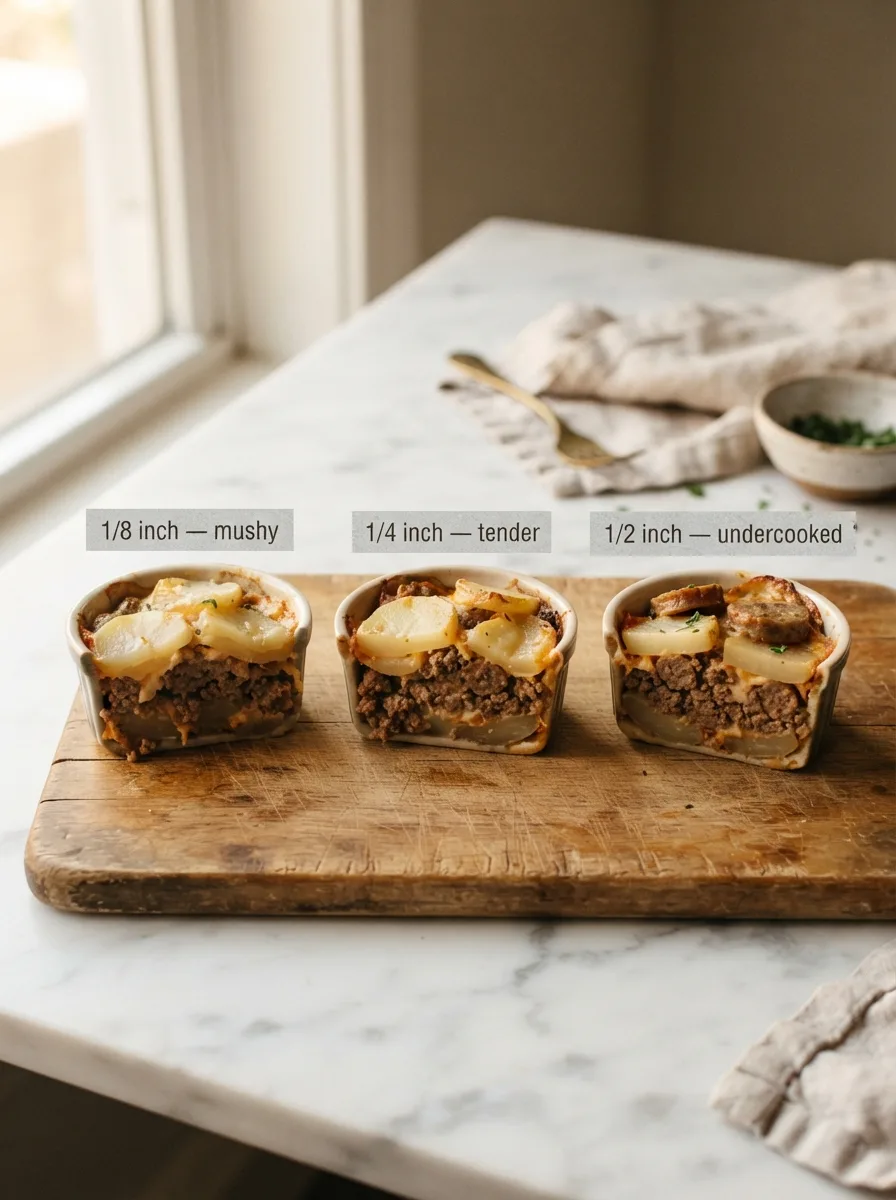
⅛-inch slices: These broke down almost completely into the gravy by the end of the bake. The result tasted fine but had no potato texture left — more like a thick beef stew than a layered bake.
¼-inch slices (the winner): Fully tender all the way through, with just enough structure to still look and taste like distinct potato rounds. This is the thickness in the recipe card below.
½-inch slices: Even after the full covered bake time, the centers of these were noticeably firmer than the edges — not raw, but not the tender bite I wanted either.
The takeaway: if your potato slices are thicker or thinner than ¼ inch, adjust the covered bake time up or down by 10–15 minutes rather than guessing at doneness by color alone.
How to Make Deep Hamburger Beef Sausage Bake
Before you start: Preheat your oven to 375°F (190°C). Slice your potatoes just before you’re ready to layer — potato slices left sitting out will start to brown at the edges.
Step 1 — Brown the Beef and Sausage
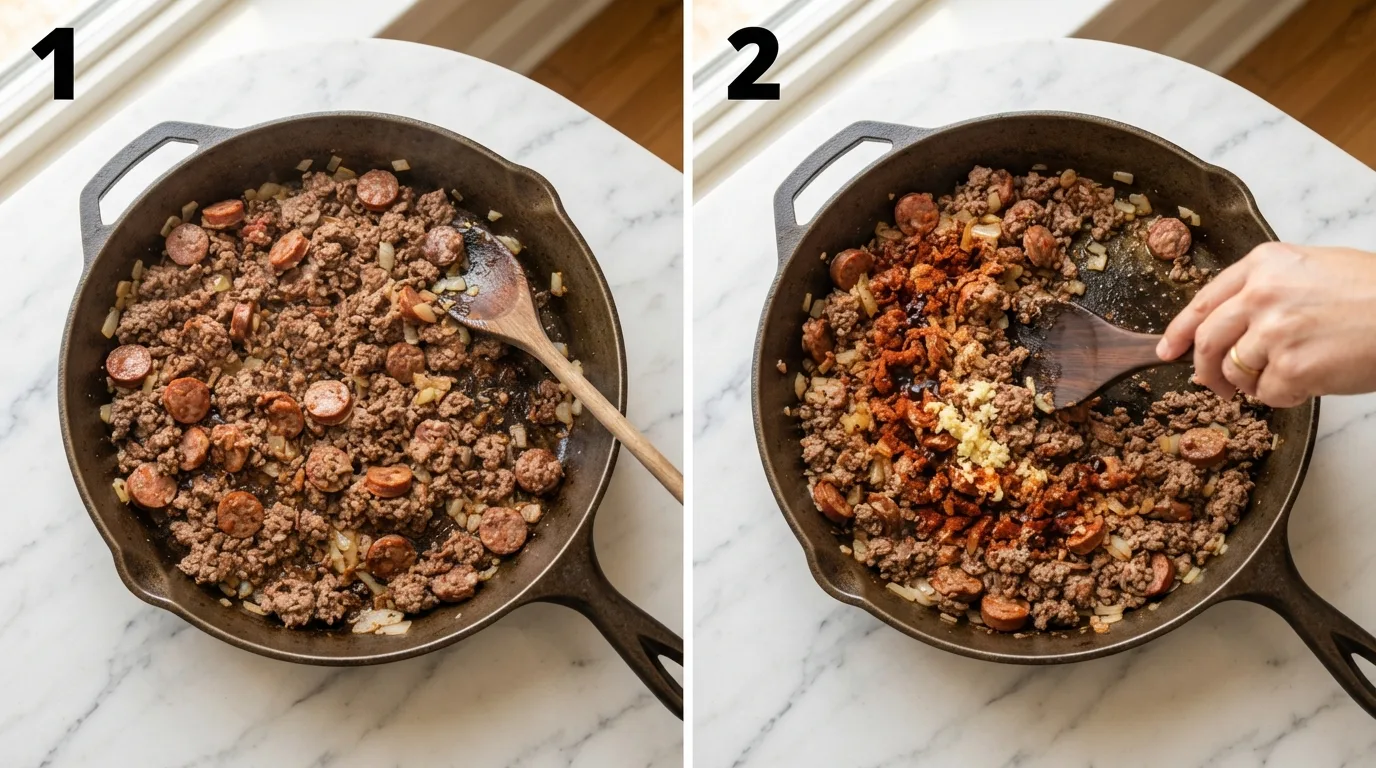
In a large skillet over medium-high heat, cook the ground beef, sliced sausage, and diced onion together, breaking up the beef as it cooks. You’re browning here, not just heating through — let the meat sit undisturbed for 60–90 seconds at a time between stirs so it actually caramelizes instead of steaming gray. This takes about 8–10 minutes. Drain excess grease, leaving about a tablespoon in the pan for flavor.
Step 2 — Season the Meat
Add the minced garlic, smoked paprika, garlic powder, onion powder, and Worcestershire sauce directly to the skillet. Stir and cook for another minute, just until the garlic smells fragrant rather than raw. Season with salt and pepper, then set the mixture aside.
Step 3 — Build the Gravy
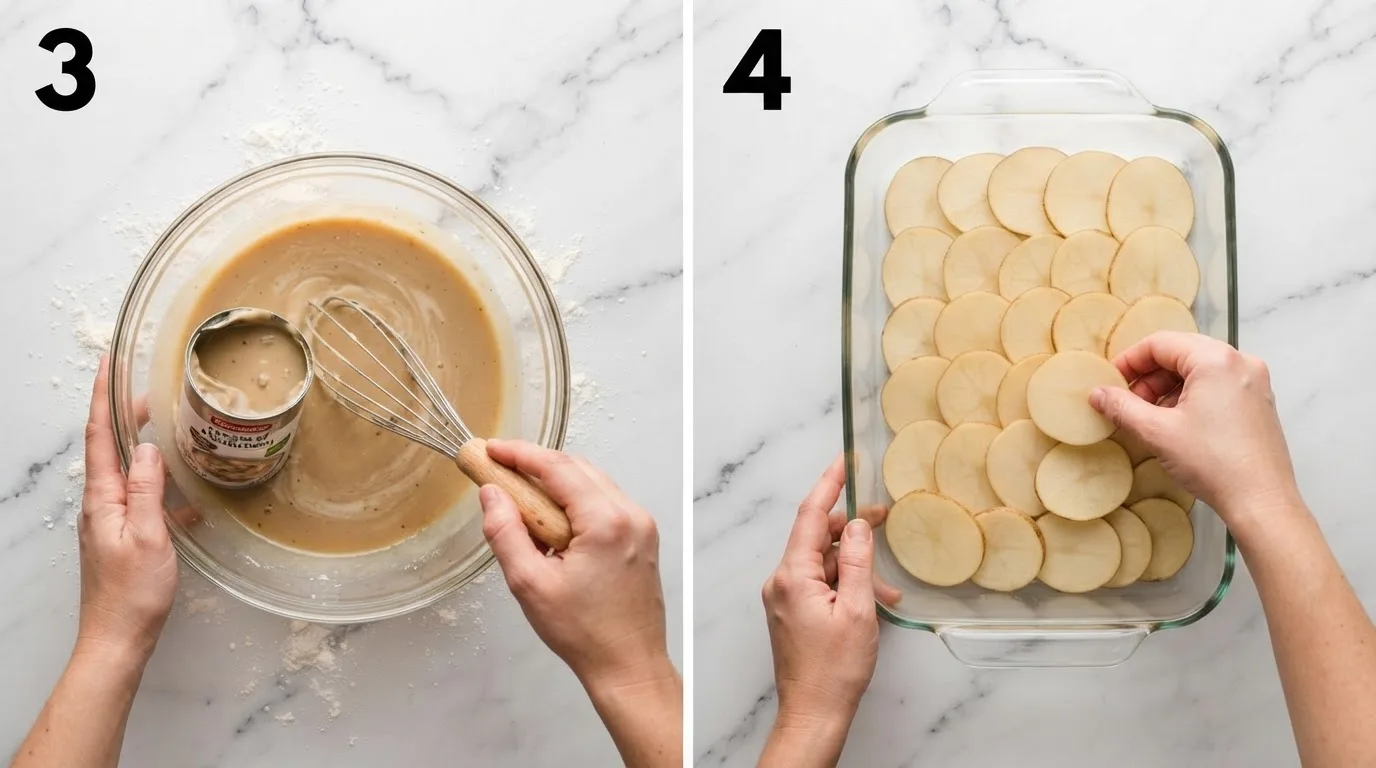
In a mixing bowl, whisk together the cream of mushroom soup, beef broth, Worcestershire sauce, and smoked paprika until smooth. This is your gravy — it should be pourable, closer to heavy cream than pancake batter. If it looks too thick to pour easily, whisk in another splash of broth.
Step 4 — Layer the Potatoes
Arrange half of the sliced potatoes in a single, slightly overlapping layer across the bottom of your baking dish. Season lightly with salt and pepper — potatoes need their own seasoning since the gravy won’t fully reach every slice.
Step 5 — Assemble the Bake
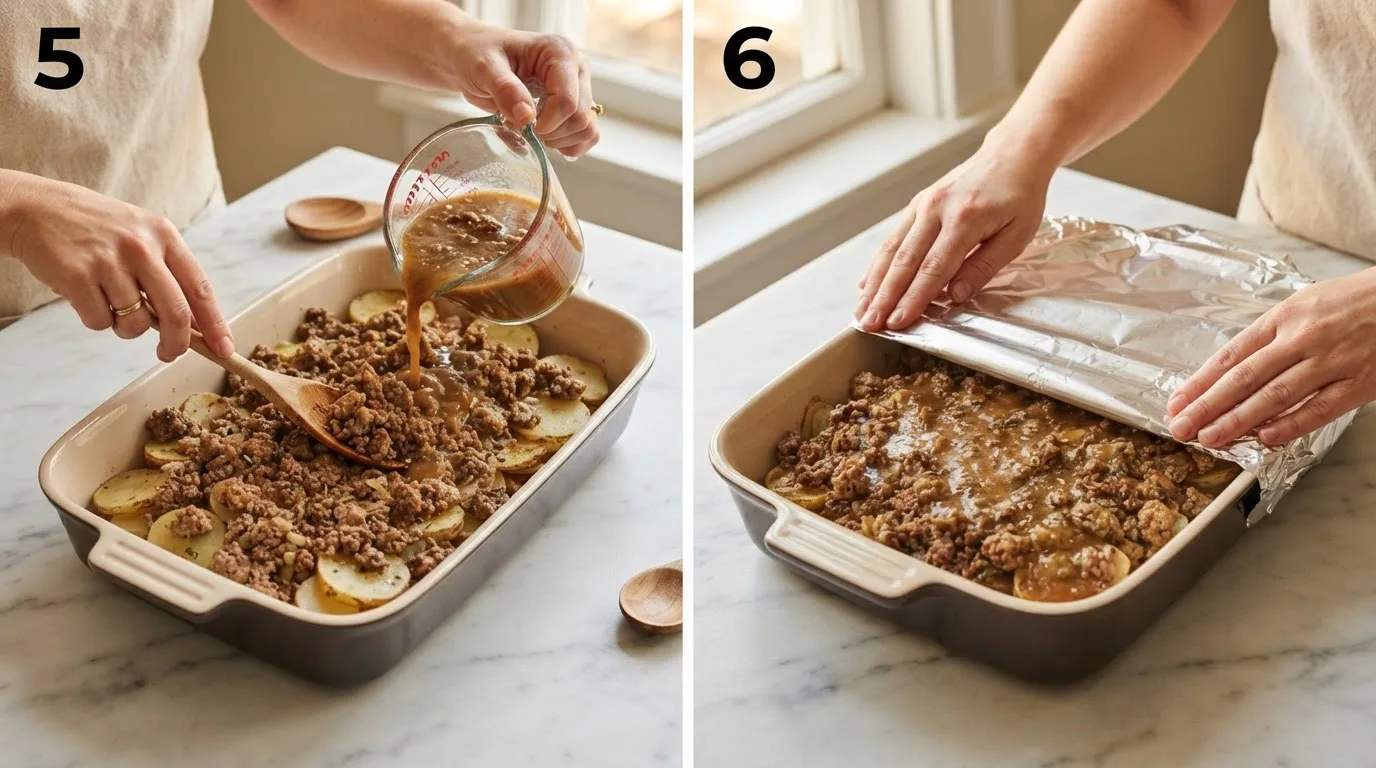
Spread half of the beef and sausage mixture evenly over the potato layer, then pour half of the gravy over the top, making sure it settles into the gaps between potato slices. Repeat with a second layer of potatoes, the remaining meat, and the remaining gravy.
Step 6 — Bake Covered, Then Uncovered
Cover the dish tightly with foil and bake at 375°F for 45 minutes. This covered stage is what steams the potatoes tender — don’t skip it or peek too often, since every foil removal lets heat escape. After 45 minutes, remove the foil, sprinkle the shredded cheddar evenly over the top, and bake uncovered for another 15–20 minutes, until the cheese is melted and just starting to turn golden at the edges.
Step 7 — Rest Before Serving
Let the bake rest for 10 minutes before serving. This isn’t optional — the gravy is still loose straight out of the oven and needs this rest to thicken enough that a serving holds together on the plate instead of running everywhere.
Pro Tips for Perfect Deep Hamburger Beef Sausage Bake
Tip 1: Slice potatoes to an even ¼-inch thickness. Uneven slices mean uneven doneness — a mandoline solves this faster and more consistently than a knife.
Tip 2: Brown the meat properly before assembling. If you dump raw or barely-browned beef and sausage straight into the layers, you lose the caramelized flavor that makes this taste like more than the sum of its parts.
Tip 3: Don’t skip the rest time. I know it’s tempting to serve straight from the oven, but the 10-minute rest is what turns a runny gravy into one that actually coats each bite.
Tip 4: Check doneness with a fork, not a clock. Oven variations mean your bake might need 5–10 minutes more or less than the timing below. Slide a fork into the center; it should meet no resistance.
Variations and Substitutions
Dietary Variations:
- Gluten-free: Swap the cream of mushroom soup for a gluten-free version, or make a quick homemade gravy with 2 tablespoons cornstarch whisked into the beef broth instead of soup. The texture stays just as thick.
- Dairy-free: Skip the cheddar topping or use a dairy-free shredded cheese blend. The gravy itself contains no dairy if you use a dairy-free cream soup substitute.
Flavor Variations:
- Cajun-spiced version: Add 1 teaspoon Cajun seasoning to the meat mixture and swap the cheddar for pepper jack.
- Loaded version: Stir 1 cup frozen corn or green beans into the meat layer for a built-in vegetable side.
Ingredient Substitutions:
- Ground turkey works in place of ground beef, though the result is noticeably leaner — add an extra tablespoon of butter to the skillet to compensate.
- Andouille sausage can replace the smoked beef sausage for a spicier, more Cajun-leaning flavor.
If you love this style of layered, gravy-based bake, my cheesy ranch potatoes and sausage is a lighter, faster weeknight version using the same potato-and-sausage combination in about half the time.
Troubleshooting
Why are my potatoes still hard after baking?
Most likely your slices were thicker than ¼ inch, or the foil wasn’t sealed tightly enough during the covered bake, letting steam escape. Return the dish to the oven, covered again, and check every 10 minutes with a fork until the centers give no resistance.
Why did my gravy turn watery?
This usually happens when the potatoes release extra moisture during baking, or the broth-to-soup ratio was off. If your gravy looks thin after baking, let the dish rest longer — up to 15 minutes — since the potatoes continue absorbing liquid as they sit.
Why is my cheese topping not browning?
Your oven may run cooler than the dial suggests, or the uncovered bake time was cut short. Move the dish to the top third of the oven for the last 5 minutes uncovered, watching closely so the cheese browns without burning.
Storage and Make-Ahead
Counter: Not recommended beyond 2 hours — this is a dairy-and-meat bake that needs refrigeration promptly.
Refrigerator: Store leftovers in an airtight container for up to 4 days. The gravy actually thickens further overnight, which many testers preferred.
Freeze: Baked and fully cooled portions freeze well for up to 3 months in a freezer-safe container. The potatoes hold their texture better than you’d expect from a frozen casserole.
Reheating: Cover with foil and reheat at 350°F for 20–25 minutes, or microwave individual portions in 1-minute bursts, stirring the gravy between bursts so it reheats evenly.
Make-Ahead: Assemble the full casserole up to 24 hours in advance, cover tightly, and refrigerate unbaked. Add about 10 extra minutes to the covered bake time since you’re starting from cold.
Frequently Asked Questions
Q: Can I use ground turkey instead of ground beef? A: Yes. Ground turkey works well, though it’s leaner — add an extra tablespoon of butter or oil to the skillet while browning so the meat layer doesn’t dry out.
Q: Do I have to use canned cream of mushroom soup? A: No. Whisk 2 tablespoons of cornstarch into the beef broth as a from-scratch gravy base if you’d rather skip canned soup. The result is slightly thinner but still coats the layers well.
Q: Can I make this ahead of time? A: Yes, assemble the full casserole unbaked up to 24 hours ahead, refrigerate, then bake straight from cold, adding about 10 minutes to the covered bake time.
Q: Why did the recipe call for russet potatoes specifically? A: Russets break down slightly as they bake, which thickens the gravy naturally. Waxy potatoes like Yukon Gold stay too firm and won’t give you the same clingy sauce.
Q: Can I freeze this after baking? A: Yes, cooled portions freeze well for up to 3 months. Thaw overnight in the fridge before reheating for the best texture.
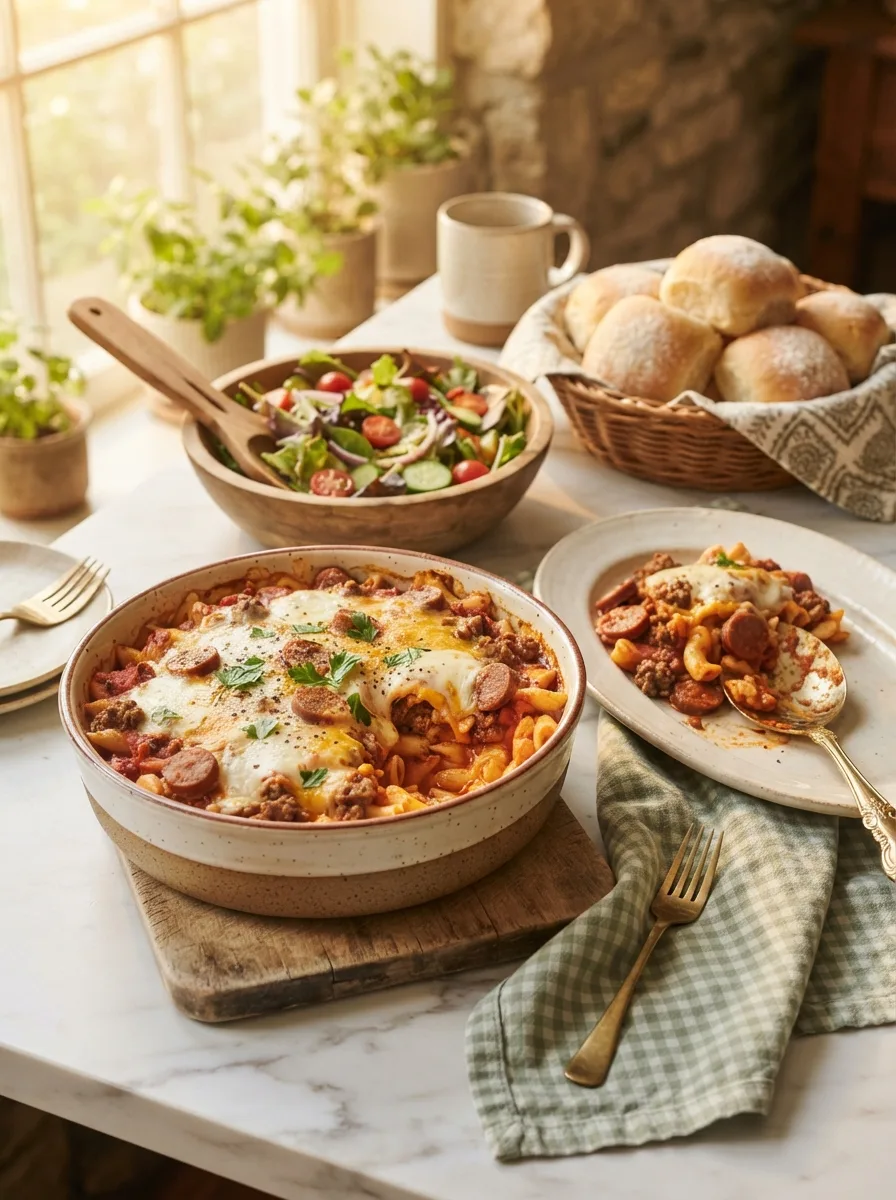
Q: What can I serve alongside this bake? A: A simple green salad or dinner rolls round it out well. For another comfort-food option from the same kitchen, my dolly’s chicken and stuffing casserole makes a great rotation partner on busy weeks.
More Comfort Food Recipes You’ll Love
- Cheesy Ranch Potatoes and Sausage — a faster weeknight take on the same potato-and-sausage combination
- Dolly’s Chicken and Stuffing Casserole — another deep, one-dish dinner that feeds a crowd
- Cheesecake Bread — if dinner’s covered, this is the dessert I’d bring to the same table
- Banana Tempura — a completely different kind of comfort, but one of my most-requested treats

Deep Hamburger Beef Sausage Bake
Ingredients
For the Beef and Sausage Layer:
- 1 lb ground beef, 80/20
- 1 lb smoked beef sausage, sliced into ½-inch rounds
- 1 medium yellow onion, diced
- 3 clove garlic, minced
- 1 tsp smoked paprika
- 1 tsp garlic powder
- 1/2 tsp onion powder
- 1 tsp Worcestershire sauce
- Salt and black pepper, to taste
For the Potato Layer:
- 2 lb russet potatoes, peeled and sliced ¼-inch thick
- Salt and black pepper, to taste
For the Gravy:
- 1 can (10.5 oz) cream of mushroom soup
- 2 cup (480ml) low-sodium beef broth
- 1 tsp Worcestershire sauce
- 1/2 tsp smoked paprika
For the Topping:
- 2 cup shredded sharp cheddar cheese
Instructions
- Preheat the oven to 375°F (190°C).
- In a large skillet over medium-high heat, brown the ground beef, sliced sausage, and diced onion, breaking up the beef as it cooks, about 8–10 minutes. Drain excess grease, leaving about 1 tablespoon in the pan.
- Stir in the garlic, smoked paprika, garlic powder, onion powder, and Worcestershire sauce. Cook 1 minute until fragrant. Season with salt and pepper and set aside.
- In a mixing bowl, whisk together the cream of mushroom soup, beef broth, Worcestershire sauce, and smoked paprika until smooth and pourable.
- Arrange half of the sliced potatoes in a slightly overlapping layer across the bottom of a deep 9×13-inch baking dish. Season lightly with salt and pepper.
- Spread half of the beef and sausage mixture over the potatoes, then pour half of the gravy evenly over the top.
- Repeat with a second layer of potatoes, the remaining meat mixture, and the remaining gravy.
- Cover tightly with foil and bake for 45 minutes.
- Remove the foil, sprinkle the shredded cheddar evenly over the top, and bake uncovered for 15–20 minutes more, until the cheese is melted and golden at the edges and a fork slides through the potatoes with no resistance.
- Let rest for 10 minutes before serving.
Notes
- Slice potatoes to an even ¼-inch thickness — this is the single most important measurement for tender, fully cooked results.
- To make this gluten-free, use a gluten-free cream soup substitute or whisk 2 tablespoons cornstarch into the broth instead of using canned soup.
- Assemble up to 24 hours ahead and refrigerate unbaked; add about 10 minutes to the covered bake time if starting cold.
- Leftovers keep in the refrigerator for up to 4 days in an airtight container.
- Baked portions freeze well for up to 3 months; thaw overnight in the fridge before reheating.
- Reheat covered at 350°F for 20–25 minutes, or microwave in 1-minute bursts, stirring the gravy between bursts.